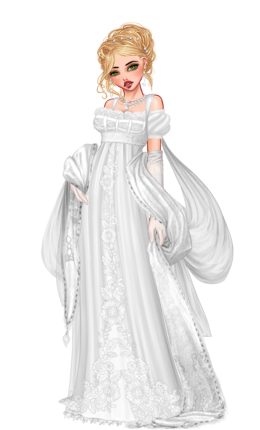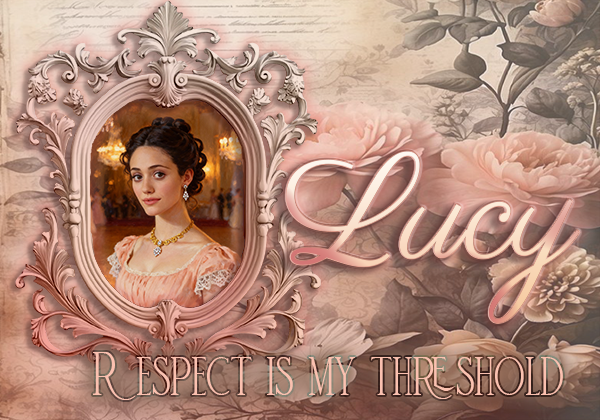
Out of the Shadow...(about) - DONE
NAME
Mɪss Lᴜᴄɪɴᴅᴀ Fɪᴛᴢᴛʜᴏᴍᴀs, "Lᴜᴄʏ"
AGE
23; Bɪʀᴛʜᴅᴀʏ: Jᴀɴᴜᴀʀʏ 3ʀᴅ
FACE CLAIM
Eᴍᴍʏ Rᴏssᴜᴍ
TRAITS
Pᴏɪsᴇᴅ | Wɪᴛᴛʏ | Sɪɴᴄᴇʀᴇ | Sᴇʟғ-Assᴜʀᴇᴅ | Lᴏʏᴀʟ | Sᴛᴜʙʙᴏʀɴ | Pʀᴏᴜᴅ | Uɴғᴏʀɢɪᴠɪɴɢ | Sᴋᴇᴘᴛɪᴄᴀʟ | Sᴀʀᴄᴀsᴛɪᴄ
PERSONALITY
Lucy Fitzthomas carries herself with quiet confidence and deliberate grace. Her composure feels natural rather than practiced, an ease shaped by temperament and a firm understanding of who she is.
She enters a room without hesitation... not out of pride, but out of calm self-assurance. She is warm without being performative, sincere without being naive. Her loyalty is steady once earned, and her boundaries are unmistakably clear. Trust, for Lucy, is a precious thing; if someone breaks it, she is not quick to offer second chances.
Lucy listens before she speaks, observes before she acts, and commits fully once she has chosen a course. She sees through flattery quickly, is wary of shallow charm, and relies on a sharp wit that easily slips into dry humor or accidental bite. She is stubborn, perceptive, thoughtful, and often far more discerning than people initially assume.
Her pride is quiet and grounded in self-respect. She does not shrink to appease others, nor does she posture to impress them. She simply stands as she is... poised, intelligent, and steadfast.
As she steps into the Yuletide Season, Lucy is not seeking permission or approval. She arrives with her own sense of worth and a presence that lingers long after she’s left the room.
FUN FACTS
Quirks
• Plays the pianoforte beautifully — unless in front of others • Straightens objects when uneasy • Gets lost on purpose
Likes
• Horses (and animals in general) • Storms • Dancing
Dislikes
• Small, enclosed spaces • Tea • Lavender (color and scent)
CONNECTIONS
Evelina — the closest thing she’s ever had to a mother, though neither of them needs the word spoken aloud. Evelina taught Lucy how to stand, how to see, and how to hold her own. Their affection runs deep and without ceremony.
Robin — raised as family beside her. They’ve survived each other since childhood and defended each other just as long. He’s impulsive, infuriating, and one of the truest hearts she knows. Lucy trusts him without hesitation... though she’d never let him know it.
Margot — As close as family in all the ways that matter. Margot is among the very few Lucy trusts without ceremony, the one she seeks when she wants honesty rather than flattery. Her quiet strength has steadied Lucy more than she knows... and she remains the only person who can out-stare her. Barely.
Ginny — Lucy enjoys her — genuinely. Ginny brings a spark that never outruns its sincerity, and Lucy finds the balance refreshing. Their dynamic sits somewhere between acquaintance and something more... and Lucy suspects it will strengthen quickly this Season.
Alaric — a familiar presence in Evelina’s household. Polite, composed, and often absorbed in his work. Lucy knows him more by consistency than by conversation.
Miles — their acquaintance is slight, but sufficient. Lucy knows the look of a man accustomed to admiration. She’s never claimed to dislike him... merely that she prefers her conversations with fewer stage lights.
Julian — known to her more by reputation than conversation. His indulgences were everything she avoids. She’s thankful their paths rarely crossed and even more grateful he never wasted his immoderate charms on her.
HISTORY
Lucy’s earliest years linger only in soft impressions; the warmth of a wool shawl, a gentle voice humming half-remembered lullabies, the sense of being loved before she understood loss. She entered the Adair household at four, orphaned but not unwanted, and Countess Evelina claimed her with a quiet, unwavering certainty. Count Thomas never gave Lucy his name, but he ensured her future: tutors, a home, and provisions in his will that spoke volumes.
Rosewood Hall shaped her far more than the circumstances of her birth. Lucy grew up in a house where intelligence was expected, discipline was taught gently, and affection appeared in steady gestures rather than spectacle. Robin, fiery and impulsive, became a brother in all but blood; Margot, highly intelligent and steadfast, became a confidante whose presence drifted with schooling but never faded. Together, the three of them formed an unconventional little constellation under Evelina’s roof.
During a childhood game, Lucy was briefly trapped in a dark storage cupboard for a short time… and from that day on, tight, airless spaces left her chest a little too tight and her palms a little too damp… though she rarely speaks of it. At ten, Thomas gifted her a young dapple-grey gelding, the first thing she ever knew was wholly hers, and it marked the beginning of the freedom she still finds in the saddle.
Though she never had a formal London Season, Lucy has attended enough salons, dinners, and quiet gatherings alongside Evelina to know society well. She knew many people by face, or by reputation, and some stood out amongst the crowd. Over the years she crossed paths with Ginny Green, whose lively sincerity never overran its warmth; with Julian Lockwood, memorable mostly for the reputation that seemed to precede him; and with Miles Seymour, who held a room’s attention almost effortlessly, though Lucy kept her opinion about the latter two to herself. Alaric Jaxley she encountered more quietly… in doorways, hallways, and the edges of Evelina’s study, a steady presence more often seen than spoken to.
Now twenty-three, Lucy’s life is balanced between what she has been given and what is about to be placed directly in her hands. In a year, her full inheritance will come to her: income, a small household of her own, and the horses that will be a source of independence and stability most women in their society rarely have.
She enters the Yuletide Season not as someone seeking rescue or permission, but as a young woman raised to stand on her own feet… composed, discerning, quietly committed to choose the shape of her own future.
To Whom It May Concern...(interview) - DONE
INTERVIEW
1. “Hᴏᴡ ᴡᴏᴜʟᴅ ʏᴏᴜ ᴅᴇsᴄʀɪʙᴇ ʏᴏᴜʀ ʀᴇᴘᴜᴛᴀᴛɪᴏɴ? Aɴᴅ ʜᴏᴡ ᴀᴄᴄᴜʀᴀᴛᴇ ɪs ᴛʜᴀᴛ ᴅᴇsᴄʀɪᴘᴛɪᴏɴ, ᴛʀᴜʟʏ?”
"Mm… I believe I am considered a curiosity. Not scandalous, not controversial... simply difficult to place neatly on a shelf. Mother would allow nothing less. No one questions her judgment aloud, and fewer still are bold enough to whisper against her.”
"As for accuracy?" I give a small smile. "I think I’m exactly as mysterious as people expect me to be... and not nearly as simple as they assume."
2. “Wʜᴀᴛ ᴄᴏᴍᴘʟɪᴍᴇɴᴛ ᴅᴏ ʏᴏᴜ ʀᴇᴄᴇɪᴠᴇ ᴍᴏsᴛ ᴏғᴛᴇɴ… ᴀɴᴅ ᴡʜʏ ᴅᴏɴ’ᴛ ʏᴏᴜ ʙᴇʟɪᴇᴠᴇ ɪᴛ?”
"I’m told I have a calming presence. Which is funny, because I hardly ever feel calm myself. I’m thinking, all the time... cataloguing, assessing, watching the room like it’s a chessboard." I brush the fabric of my dress across my legs delicately, "If I appear serene, it’s only because I’ve learned how to look that way."
3. “Dᴇsᴄʀɪʙᴇ ʏᴏᴜʀ ɪᴅᴇᴀʟ sᴜɪᴛᴏʀ.”
"Someone who speaks plainly, listens sincerely, and doesn’t mistake kindness for weakness. A man who isn’t threatened by a woman who has a mind... or a past... of her own. He doesn’t need to be perfect. In fact, I’d prefer he wasn’t.
But he must be clever, someone who meets me where I am, and capable of surprising me… at least a little."
4. “Wʜᴀᴛ ɪs ᴛʜᴇ ᴡᴏʀsᴛ ᴀᴅᴠɪᴄᴇ ʏᴏᴜ’ᴠᴇ ᴇᴠᴇʀ ғᴏʟʟᴏᴡᴇᴅ?”
“Sidesaddle is the proper seat for a lady. I tried it. Once. Countess Adair took one look at my face afterward and said, ‘My dear, propriety is useless if you are concussed.’ I’ve ridden comfortably ever since.”
5. “Wʜᴀᴛ ɪs ʏᴏᴜʀ ᴍᴏsᴛ ᴄᴏɴᴛʀᴏᴠᴇʀsɪᴀʟ ᴏᴘɪɴɪᴏɴ… ᴀʙᴏᴜᴛ ᴛᴇᴀ, ғᴀsʜɪᴏɴ, ᴄᴏᴜʀᴛɪɴɢ ᴇᴛɪϙᴜᴇᴛᴛᴇ—ᴏʀ ᴀɴʏᴛʜɪɴɢ ᴇʟsᴇ?”
"I dislike tea. There. I’ve said it. Weak tea, strong tea, sweetened, unsweetened... it all tastes like disappointment in a cup. If anyone faints hearing this, please revive them with anything but tea."
6. “Wʜᴀᴛ ɪs ᴏɴᴇ ᴛʜɪɴɢ ʏᴏᴜʀ ғᴀᴍɪʟʏ ᴡᴏᴜʟᴅ ʙᴇ ʜᴏʀʀɪғɪᴇᴅ ᴛᴏ ʟᴇᴀʀɴ ᴀʙᴏᴜᴛ ʏᴏᴜ?”
"That half the time I ‘get lost,’ it’s entirely intentional.
I like discovering things I’m not supposed to see... old corridors, gardens no one tends anymore, quiet corners where people forget to pretend. It’s remarkable what one discovers when one decides to wander."
7. “Wʜᴀᴛ’s ʏᴏᴜʀ ᴘᴇʀsᴏɴᴀʟ ᴍᴏᴛᴛᴏ?”
"Respect is my threshold. Cross it well, or not at all."
8. “Wʜᴀᴛ ɪs ᴛʜᴇ ᴍᴏsᴛ sᴄᴀɴᴅᴀʟᴏᴜs ᴛʜɪɴɢ ʏᴏᴜ’ᴠᴇ ᴅᴇғɪɴɪᴛᴇʟʏ ɴᴇᴠᴇʀ ᴅᴏɴᴇ?”
With a perfectly straight face. "I have definitely never slipped out of a crowded gathering by climbing out a window to avoid a suitor I could not endure for another minute. …Definitely. Never."
INTERESTS
Julien | Miles | Sebastian | Ginny
THEME SONG True Colors; Brooklyn Duo (original by Cyndi Lauper)
ACTIVITIES
❄︎ Creating Decorations - Dec 6th to Dec 10th
(idk which day on these I'm just imagining it happens at some point in this time frame - let me know if I need to narrow it down fully)
Miles - wreaths/bows | Julian - collecting greenery
❄︎ The Mistletoe Waltz - Dec 10th
Dance card - Looks like Lucy's card gets filled.
❄︎ Hunting Trip - Dec 12th
Sebastian (Ellie) in the forest to the east
❄︎ Music evening - Dec 13th
Ginny (Will sing | Lucy will play pianoforte)
ROUND 1 - The First Snow of The Season - DONE
CHAPTER 1 — “The Blue Bloom Braves the Frost” - DONE
The frost hadn’t fully lifted from the path outside, and I preferred it that way. The cold crept in overnight. The kind that tightened the air and made my breath look sharper than it felt. It was real… honest.
I pulled my gloves on and stepped into the morning light, just tipping over the line of tall evergreens to the east. I headed west, across the lawn and past the stables… the place I probably knew better than most rooms inside the house. It wasn’t my destination now, but it would be later, at some point. Just like every other day.
The grounds had changed since I was a child, subtle in some places, brazen in others. I wanted to see the newest differences for myself before the house filled with eyes and anticipation.
I walked with purpose, not drifting but studying. Both admiring and analyzing how the gardeners trimmed the hedges more tightly than last winter, and how the stone paths had been reset… cleaner and straighter than just a few days ago. The small fortune Mother exchanged for her idea of perfection could not be questioned. No one would dare.
I slowed near the Orangery, almost amazed how the row of stained windows sent patterns and hues of radiating yellows and greens across the exotic leaves inside. More of a dynamic work of art than the practical sheathing against December’s cold it truly was.
Real glass. Once again, no expense had been spared.
It had to be this way. Not only to Mother’s taste… but to the expectation that settled on our household within the last year.
Hosting the delayed Season.
The first since Father had gone. I felt the thought land without weight, just a small shift inside me… as if acknowledging a painting someone had moved on the wall. His illness had taken him slowly, steadily. A long, expected fade. The sorrow had ebbed months ago. What lingered now was the quiet fact of it… that he would not see this year, and that the Season had come whether or not I’d ever imagined myself stepping into it.
I continued walking until I crested the small hill overlooking Thornmere Lake. The water was still, a mirror to the cloudy sky above.
Serene.
I inhaled deeply, the brisk air stinging my lungs, and wondered if the calm suited me too well… the quiet before a different kind of storm. My life was shifting. Not violently, not dramatically, but inevitably. The Count would have insisted on decorum, on duty. Evelina had insisted on readiness. And now here it was… finally time to walk forward.
And somewhere beneath that quiet, a small current of curiosity stirred… not about the Season itself, but about the people it would pull through Rosewood’s doors. The thought didn’t unsettle me; it nudged, lightly, like the first hint of wind before snowfall.
I took one last look at the lake before turning back toward the house.
There was nothing to brace for, just the day ahead. Time still before the estate fell under society’s scrutiny.
I followed the path along the side of the house, boots crunching lightly as the familiar scent of the kitchen drifted out… cinnamon, heat, something frying. The kitchen window was cracked again, letting out a curl of warmth that vanished into the cold.
Voices approached from the service path… light, hurried footsteps rushing against the chill.
There were two of them, both dressed in Rosewood livery. The younger one had been trailing Margot nearly every day this week.
“…she said they’re arriving early,” the girl said, her thick Yorkshire accent stretching warmly around the words.
“Most of them?” the older maid murmured.
“A few. And one gentleman… ’parently he’s… difficult.”
I lifted an eyebrow at that generous understatement. Around here, “difficult” could mean anything from ‘picky about linens’ to ‘expects the world to shift for him without asking.’
It made me wonder which of the incoming guests warranted such warnings — and what sort of man the Coaching Inn considered “difficult.” A puzzle, perhaps. I’d decide for myself soon enough.
“Which one?” the older maid pressed.
“I don’t know his name,” the girl sighed. “But the staff at the Coaching Inn warned us he’s the sort who don’t tolerate mistakes. They say he don’t even raise his voice… just looks at you like you should already know better.”
A quiet breath escaped me… amused.
Well. That narrowed it down to half the London gentry.
“Poor man,” the older maid said, clicking her tongue. “Coming here of all places with an attitude like that.”
“Why?” the girl asked.
“Because the Countess doesn’t bend,” the older replied. “And neither does Miss Fitzthomas.”
They hurried toward the back entrance, never noticing me.
The statement sat in the air for a moment… it wasn’t praise, nor censure, simply a known truth. It settled in my chest with a strange steadiness… and a flicker of something I refused to name.
I followed the path behind the house, letting the cold settle over me again. Hay and clean leather drifted on the air as I passed the wide doors of the stables, and I was almost beyond them when a familiar voice called out...
“You’re skulking around early today.”
The corner of my mouth tilted… barely.
“One day you will cease with your tales… I don’t… skulk.”
Robin stood leaning against the stable entrance, a pitchfork tucked under one arm, mischief written plainly across his face.
“No? Then what do you call hovering by the servants’ entrance listening to gossip?”
“I wasn’t hovering,” I said evenly. “I was walking. They simply happened to speak in my direction.”
He snorted. “Aye. And the frost simply happens to land where you’re looking.”
I stepped closer, eyeing the bundled feed sacks behind him.
“Shouldn’t you be inside? Or has Mother finally entrusted you with outdoor responsibilities again?”
“Ha. Hilarious.” He jabbed the pitchfork toward the ground. “I was bored. Margot interpreted that as volunteering.”
“And yet she handed you a weapon. Bold of her.”
His grin widened — bright, familiar. The kind that always threatened to unravel my composure, no matter how tightly I stitched it.
“You’re wound tight today,” he observed lightly. “Season nerves?”
“Hardly.”
“Mm.” He tipped his head, pretending not to believe me. “Well, Margot’s terrorizing the staff, so if you want to avoid being handed a clipboard, best turn back now.”
“Sound advice,” I said.
“And Lucy?” he added as I stepped away.
“Yes?”
“You’ll be fine.”
The words landed without grandeur, simple, steady, and exactly what he meant.
Of course, I would be fine. I didn’t need him telling me that. But even as I turned away, I felt the warmth of his encouragement anyway and let it sink in.
Inside, the corridors were already stirring. The staff were in motion. Voices kept low. Footmen shifting crates. Margot stood near the sweeping staircase, an armful of folded linens balanced effortlessly, her expression capable of bending iron.
I tried to slip behind a passing servant, hoping to make it through unnoticed, but Margot’s voice stretched out like a snare, halting me where I stood. She didn’t blink at finding me there… only shifted the stack against her hip and said, “Ah, Lucy… good. You’re here.”
“For what?” I asked lightly.
“Sanity.”
The word was dry as winter bark.
She angled her head toward the far hall, where a footman had just attempted to carry two crates at once and nearly lost both.
I pressed my lips together to keep from smiling. “Is it so dire already?”
“It will be.” She handed off the linens to a waiting maid without looking away from me. “Half the house is preparing as if the Queen herself intends to arrive. The other half is preparing as if she already has.”
A small pulse tightened in my chest — too quick, too sharp — and my fingers curled once before I forced them still again, smoothing the reaction away as if it had never existed.
Margot’s gaze flicked to my hand, then to my face. She missed nothing.
“Do you think she will?” I asked, keeping my tone even.
“It’s possible.” She didn’t sugarcoat things with me; she never had. “Which is why someone in this household ought to remain composed…” Her tone leveled, almost pointed. “…and we both know it’s least likely to be Robin.”
There was no admonishment in it — just quiet expectation. The kind she trusted me to meet without coaxing.
I inclined my head slightly. “I intend to.”
“I know.” She nodded. It wasn’t reassurance, it was recognition.
Only then did she add, “Your mother would like to see you. She’s in her sitting room.”
“Now?”
“When you wish. But don’t make her wait too long. She masks it well, but the Season weighs on her more than she admits.”
That — coming from Margot — held gravity.
I touched her arm in thanks. She didn’t soften, but she didn’t move away either.
“Go,” she said simply. “Before someone sets the silver on fire.
She brushed past the footmen with a few clipped instructions, offering a final nod toward the eastern corridor. I followed it straight to Evelina’s sitting room.
Warm, elegant, unchanging. Dot and Spot lifted their heads from the fireside rug as I entered, tails wagging happily.
“Lucy, darling,” Evelina said, rising only partially from her seat before deciding she preferred to stay comfortable. “Good morning.”
The smile for both her and the pups was soft but genuine. I gave each dalmatian undue attention, rubbing behind their ears before making my way over and settling in the chair opposite her.
I accepted the cup of coffee she pushed toward me. She never forced tea on me, one of the countless kindnesses she never announced.
“You’ve been walking,” she observed.
“I needed a moment before the house fills.”
“That is wise.” She folded her hands. “This year will be busy. And… significant.”
“I know.”
“I’m not worried,” she added gently. “You were raised for this without realizing it.”
A soft breath slipped from me. I wasn’t sure whether to agree or disagree. In the end, I settled merely on an acknowledgment.
“I trust your judgment,” Evelina continued. “Form your impressions. Decide who deserves your attention. You are not being presented like some trinket on a tray. You are stepping into society as your own force.”
My throat tightened… not with nerves, but something steadier.
“I intend to,” I said.
“Good. Then enjoy it.”
Her smile was small, knowing… and edged with a hint of warning. “Within reason, of course.”
“Of course.”
But the reminder pricked me unexpectedly. Within reason.
Did she think I was likely to do anything else?
I understood exactly how quickly one misstep could turn into a story whispered across every drawing room in London. I had spent years learning the rules… not to ape them, but to avoid giving anyone reason to question my place here.
Despite the shelter I’d always received under her and father’s care… they couldn’t have shielded me from the truth forever. My birth wasn’t a problem… because of them. But one wrong move and everything they had done… every courtesy, every protection…
I shuddered softly. I was an Adair in everything but name. And sometimes… names mattered. She should know I didn’t plan on giving anyone a reason to start questioning her generosity in taking me in… and loving me as she had.
Still… I tucked the thought away. I knew she meant well.
“This will always be your home, Lucy.”
My stomach flipped — a small, quiet twist I hadn’t expected.
Not sentimentality… but the raw honesty of her words. Well… maybe a little sentiment… some nostalgia.
Rosewood had been my entire world since I was four, and yet the Season threatened to step me outside its walls in ways I hadn’t measured until now.
I held her gaze, steady as ever, but something inside me tightened and eased at the same time — an anchor and a release.
“Yes,” I said softly. “I know.”
After a few more instructions... mostly regarding the day’s schedule, she dismissed me with a wave, and I drifted down the familiar corridor toward my rooms.
The Cornflower Room greeted me with its soft blues and winter-light whites… modest, enduring, quietly strong. A flower that thrived in unexpected places, refusing to wilt even in harsher seasons.
Resilient.
Steady.
It fit.
I let my gloves fall to the small writing table and crossed to the window, the lawn glimmering faintly as frost melted to dew droplets under the morning sun.
It wasn’t dread that set my jaw subtly at that moment… it was determination. I wasn’t concerned about the Season itself. The preparations had been made, and neither Margot nor Mother accepted anything less than precision.
No… it was the performance ingrained in it all. Falsity was not a strong suit of mine. If push came to shove, my tongue could become a dart better hidden from “proper society.”
But pretense could be navigated. Meaning could be found. And I could find whatever it was that I was looking for. I just had to face what lay ahead.
Being ready wasn’t an option. It was a foregone conclusion.
Let them come.
I would see who in the crowd deserved my time.
CHAPTER 2 — “The Frost & The Fixings” - DONE
The Winter Conservatory looked almost unreal at dusk. Light thinned itself across the glass, turning each pane a soft wash of greenish-yellow, while the silhouettes of the citrus trees glowed faintly behind them.
I walked the central aisle once, more out of habit than necessity, checking the lamps, the soil, the moisture at the base of each pot. Everything was in order. Everything was ready to be admired, even perhaps by some people who had never seen an orange ripen on the branch.
Inside, the air smelled of warm earth and zesty sweetness. Outside, it smelled of stone cooling under the sky.
When I stepped out, the door settled shut with a soft click behind me. A fine crust of silver dusted the stone path, catching what remained of the light and turning it thin and pale. I drew my cloak closer and set off along the rear walk toward the house.
Footsteps reached me before the speakers did. Two sets, rounding the curve from the opposite direction. I knew Evelina’s gait as well as my own. The taller figure beside her I recognized first from his outline: the cut of the coat, the particular angle of his shoulders. Lord Lockwood had a way of occupying space that drew the eye, whether one wished it or not.
I slowed, without quite meaning to… not hiding so much as allowing the world to move around me.
“Had I known—”
If I hadn’t gotten that quick glimpse before the high hedge between the Conservatory and the main walk blurred them into silhouettes, I might not have known who it was at all.
“Had I told you,” Evelina answered, her tone gentler than she used with most, “you would have fled straight back to Vienna, and I should never have had the opportunity to—”
He gave a soft huff that was almost a laugh. “To keep watch over me?”
“—to ensure you were… well.” The last word thinned in the cold air. I heard no pity in it, only care tempered by years. A care I was directly familiar with.
Their steps went on past the turn. I did not. I let out a breath I hadn’t realized I’d been holding and resumed my own way toward the side door.
I had seen Lord Lockwood before, of course… always at a distance, always with stories arriving half a moment ahead of him. In London, his name passed through drawing rooms like a draft, carrying equal parts admiration and speculation. Here, on a quiet garden path at the back of Rosewood, he sounded… tired. His voice was lower than the last time I’d heard it in a crowded drawing room, roughened as if by travel or something less easily named.
The cadence of it stayed… the ease in her tone, the way his amusement sat over something weightier. I carried that small sound with me to the side door and into the warm corridor, with a sense of guilt that I had intruded on something incredibly personal, though I had no clue what. So I tucked it away… like a slip of paper stuffed in a tin box until I figured out what to do with it.
~~~~~~⏺️⏺️⏺️⏺️⏺️⏺️⏺️⏺️⏺️⏺️⏺️⏺️~~~~~~~
The lower gallery was bright with morning light, the tall windows softening the winter sky into a pale wash of blue. Guests gathered in loose constellations, revolving around the room at varying degrees. Near one set of windows, a knot of young men discussed the weather as if it had personally offended them. That’s where I spotted Lord Lockwood, slightly apart from the group, one hand idly brushing behind Dot’s ear, but his gaze was fixed on the gardens with an unreadable expression. I wasn’t entirely sure what to make of that… so I decided I needn’t try.
A small cluster of ladies arranged themselves in careful proximity to the best light nearest the great hearth, and the older generation glided in a quieter orbit around Evelina, like planets that had known their sun for years.
Near the mantel, Margot conferred with a footman, her notebook open, her posture straight, her attention sharp. There was precision in her manner. She guarded Rosewood’s order the way some women guarded family heirlooms… devoutly, but with a compassion few ever saw.
I slipped in near the column where Robin had already stationed himself. He was, of course, pretending that his vantage point… one that let him observe nearly everyone… was pure coincidence.
“You cut that close,” he murmured, low enough that only I could hear. “She’s in full command this morning.”
Before I could answer, a splash of blue silk caught my eye. Miss Virginia Green, or Ginny as she had insisted from our earliest acquaintance, was speaking animatedly to someone I didn’t recognize. Upon seeing me, her face lit up, and she dipped a small conspiratorial nod in greeting. I lifted gloved fingers in small agreement, a corner of my mouth lifting. It was impossible not to, though… I wasn’t quite sure what I had just agreed to.
“Is there a morning when she is not?” I said.
Robin made a soft sound that might have been laughter, adjusting his gloves with unnecessary precision. He looked up only when Evelina stepped forward.
Dot and Spot moved too, following to rest at her feet the moment she reached the hearth, as if they had been waiting for their cue to preside over the assembly.
“Thank you for joining me this morning,” she said, her voice carrying just enough to reach the edges of the room. “The Yuletide holidays begin today, and I would like to continue a tradition long dear to our family.”
Her gaze brushed over the gathering and paused.
“When the house was smaller, and the winters colder, we made our own decorations for the Season. The children…” her eyes rested briefly on Robin and on me, warm without flourish, “...took great pride in gathering greenery from the ground. Holly, ivy, mistletoe… whether or not they brought in more twigs than were strictly useful is a little questionable.”
Robin made a quiet noise of protest under his breath. I nudged him with my elbow. He bore it with dignity.
“We’d make our own wreaths, garlands, and small ornaments, and hung them ourselves throughout the house. This year, I’d like us to revive that custom.”
The murmur that followed was soft but favorable.
The greenhouse has been set with frames and red and green fabrics for those who prefer to work indoors; others may walk the grounds and gather the greenery. On the tenth, we will come together to decorate. And because a dear friend of mine, Queen Charlotte, delights in the custom, we shall also dress a small yew tree as she once taught me… with sweetmeats and bright little trimmings
She let the words settle. Her gaze softened as she looked over the gathering, her first true welcome to them all, and the quiet beginning of something she cherished.
“Let us begin the Season as it ought to begin… with our own hands in the work.”
The room broke gently into motion. A few guests drifted toward the balcony doors to test the morning weather; others gravitated toward the pianoforte, speculating whether someone might play before luncheon. That’s where I spotted the twins, Lord Sebastian Ainsworth and his sister Lady Elizabeth Ainsworth. I knew of them, it would have been impossible not to, but only given their families' closeness to Mother… well, and Father, once. I’d never met them personally, but their closeness was well regarded among the Ton.
My attention shifted next to Lord Seymour, standing under a painting of the late Count with several others. He had just laughed at some remark Lord Cattaneo, the newly titled Viscount, had given. I recognized Lord Seymour at once… not through familiarity, but because certain men always stood at the bright center of a room, no matter where that room happened to be. Perhaps it was uncharitable of me… but he carried himself like someone far too accustomed to admiration. And that attention.
Robin leaned closer. “We’ll be carrying half the holly. You know that.”
I gave him a mild look. “You say that every year.”
“And every year I’m right.” His grin was fleeting but sincere. “Come on… before Margot assigns us something ambitious.”
“Ah-ah… not so fast, Robin…”
I didn’t manage to hide the soft giggle that escaped me. As if she sensed mischief by scent alone, Margot appeared beside us, letter-clip in hand and a determined eye leveled squarely at him.
“And here ends my brief freedom. I shall remember it fondly.”
He was quite incorrigible.
~~~~~~⏺️⏺️⏺️⏺️⏺️⏺️⏺️⏺️⏺️⏺️⏺️⏺️~~~~~~~
Icy patterns, thin as lace, etched toward the corners of the window panes that morning… attesting to the hardening cold beyond the glass. I noticed only because the curtains were already pulled back, just enough to let in the pale winter light. The fire burned brightly in the hearth, and my morning gown hung across the screen, its sleeves smoothed and its hem arranged with familiar care. The room held that quiet order it always did after the maids’ first round.
I stretched but dreaded slipping out from under the heavy covers despite the crackling warmth, letting my mind wander over the things I wanted to accomplish that day. Correspondences, a visit to the stables… Rascal was likely chomping at the bit for a good run… and wreaths.
And maybe, I thought as I finally slipped out of bed, I might find some time to mingle a little with more of the guests. I’d certainly hear no end of it if I didn’t start making at least a small amount of effort.
The truth was, I didn’t know why I was holding back. Not fear, surely not that. But there was a little tickle down my spine when I thought that. Annoyance? Uncertainty?
I shook my head with a loud huff. It was hard to explain. Hard to consider. I didn’t want to fail. Not Mother, not for myself. But the deeper question, the one I had held off considering… is what exactly I wanted to achieve at the end of all this?
Love? Marriage? Shouldn’t those be the same thing?
I wrinkled my nose, hands on hips as I contemplated that last thought a bit more. Or at least one would hope that those things went hand in hand. But that wasn’t the case. Too often, women didn’t often have choices. I knew that. I understood that my circumstances were vastly different than most.
So, what did I truly want?
I sighed softly, finding my way to my writing table, where I finally spotted the small gift.
It had been placed squarely on the blotter, impossible to miss now that I was paying attention: white paper, neatly folded, tied with a narrow ribbon the color of winter sky. A small card rested beneath the bow, the Adair crest pressed faintly into its corner.
A perfectly timed distraction, if you asked me. I sat and drew it closer.
Inside the paper lay a single caramel square, dusted with cocoa and wrapped in a twist of waxed paper to keep it from sticking. It smelled faintly of butter and sugar, unmistakably the work of our own kitchen rather than any London confectioner.
I drew out the formal invitation tucked underneath. The script was precise, my name in dark, clean ink for the Mistletoe Waltz on the tenth, the hour, the usual assurances about music, dancing, and company. Mother and Margot both had made sure to keep some things a secret from me. Some of the planning… the activities. Oh, I tried to gather the details… but they hoped I’d be as thrilled with the surprises as everyone else.
And now the first dance was upon us. My first official ball. Not as a child tucked in the gallery, not at Evelina’s side, not watching from the periphery. As part of it. As the reason some of those carriages had driven over rocky roads to get here. To see what this season had to offer. As one of the faces other people would weigh and tally and speak about afterward.
A prize or a product?
My fingers tightened briefly on the edge of the card. I set it down before I creased it.
I was not afraid, I decided. Not exactly. I could not control the eyes in that ballroom. I could, at least, choose the moments that I allowed to matter.
The greenhouse would be warm despite the weather. The work would be quiet. And that was exactly the kind of courage I felt equal to that day.
But first… a ride. I called the maid with a request for my specialty riding habit.
~~~~~~⏺️⏺️⏺️⏺️⏺️⏺️⏺️⏺️⏺️⏺️⏺️⏺️~~~~~~~
Only the tips of my ears carried the evidence of my brisk ride by the time I finished dressing for the greenhouse. I’d opted for a serviceable gown, wool I wouldn’t worry about snagging, sleeves I could roll, gloves thin enough to feel wire and stems… something practical… efficient. No one of importance would be judging wreaths just yet.
The sky had turned that particular pale shade that promised more cold than snow. But this venture out, I tugged my scarf tighter around my face to combat the bite in the air as I traveled the path past the garden to the Orangery.
The greenhouse door yielded easily; the new door well oiled and hung. Warmth met me first, then the layered scents of evergreen, damp soil, citrus, and the faint sweetness of sap. Someone had already laid out the frames along the main table. Baskets of cut holly, fir, and ivy waited nearby, dark and fragrant.
There were also side tables set with coils of ribbon, scraps of velvet and lace, and an array of sewing supplies. At one table, a member of the staff worked diligently… most likely at Margot’s direction. There were at least 4 completed wreaths and a small stack of bows piling up at the edge of that table.
I chose a location where the light fell cleanly and proceeded to set up a work area. Wire, shears, a wreath frame, a basket of fir and ivy within easy reach. Simple enough. Orderly. Manageable.
I sorted the longer springs from the shorter then drew the circular wire frame toward me. The metal felt firm but pliable under my fingers. I began with fir, working slowly, binding the first sprigs with wire until the shape had some weight of its own. The rhythm of it settled me… loop, twist, tuck, repeat… simply sinking into the rhythm while the sounds around me receded and there was only the rustle of branches.
I paid little attention to the other activity going on around me, just focusing, sinking into the work so nostalgic it was second nature.
I had just begun shaping my second wreath, binding the base with a twist of evergreen, when the door at the far end of the greenhouse opened with a bitter gust of colder air.
I didn’t look up at once. I heard a maid make an offer of something warm to drink… tea… I almost gagged, shaking my head. There was a scuff of boots, the brief pause of someone adjusting to the change in temperature… and then the faint jingle of metal buttons and a low hum, as if the newcomer had brought music in with them.
“You make that look far less chaotic than I imagine it truly is.”
I glanced up, expecting the voice to be addressed to another in the room, but it was too close, and when spotted… to direct.
Lord Miles Seymour stood a few feet away, his hat, gloves, and overcoat suddenly being whisked away by one of the liveried attendants. The cold had just barely touched his cheeks, lending color to features I recognized all too well from London ballrooms… only there, the light had been candle-gold and reflected in a hundred admiring eyes.
Here, it was winter-white and too cold for all that composure… or that off-center tilt of his mouth tossed my way with a little incline of his head.
“Miss Fitzthomas,” he said. “Lovely to make your acquaintance, again.”
“Lord Seymour.” I straightened a little without releasing the mold in my hand. I blinked… once, then nodded. “It only looks that way because you arrived after the chaos.”
He strolled the last few steps to me, eyes scanning the clutter spread before me. And when I say clutter… I do mean the strategically organized supplies that all had their very proper place on the table.
“Well,” He said lightly, “you certainly do seem to have things well in hand.”
I wasn’t sure what to do with his attention or that comment… harmless as they were.
“You have chosen the indoor form of bravery, I see.”
“I was told there would be greenery,” he replied, resting his hands on the back of the chair opposite me. “And that if I remained idle, Lady de Vere might assign me to polishing silver. I decided to tempt the wreaths instead.”
“A sound calculation.”
His gaze was quick without being restless, as if assessing the room for paths through conversation rather than exits.
“May I join you?” He asked, “Or have you claimed this table in the name of the household?”
“I would not dare claim an entire table,” I said. Though a small part of me wondered why I hadn’t advised the servants against adding an extra chair to my table. “Only the portion currently buried under my mistakes.”
We both glanced at the frame I held. It wasn’t truly a mess, but the holly I’d woven in was more prickly than elegant. It wasn’t perfect… a mistake in and of itself. He smiled, the expression warmer than the practiced gleam I anticipated.
“If that is a mistake,” he said, slipping into the available seat, “I am about to produce a disaster. You will need to stand between us and Lady de Vere.”
“Lady de Vere has weathered worse than a crooked ribbon,” I hesitantly offered him one of the empty frames beside me. “I’m sure you will handle whatever criticism with your usual charm… and grace.”
His lips twitched a little and he held my gaze perhaps a breath longer than necessary before finally accepting my offer.
“I must admit,” that flicker of amusement remained, subtle but deliberate, while he reached, unwisely… for a sprig of holly. “That didn’t sound exactly as… charming… as one might expect.”
“And you do expect a certain… brand of expectation?”
I shouldn’t have said it. I’d been too blunt. I felt it the moment it left my mouth… and his expression confirmed he felt it too.
“Well,” he said after a beat, the charm returning but edged now, “most people do have a certain reaction to me. One grows familiar with it… even expects it, on occasion.”
I turned back to my wreath. A much easier task than attempting to figure out that bit of unexpected honesty.
“I cannot doubt that it serves you well, Lord.” I said, “In matters of conduct, you seem… well-practiced.”
“You,” he said quietly, “do not seem to share that reaction.”
My fingers stilled for a heartbeat and I saw that he noticed that too when I looked back at him.
“That wasn’t a complaint,” he added, softer now, as if he’d surprised himself as much as he’d surprised me. “Only… peculiar.”
“Peculiar how?” The words slipped out before I could call them back.
His eyes moved over my work… slow, assessing, unhurried. But when he spoke, it was obvious his attention wasn’t on the wreath.
“Most people,” he admitted, “try to meet me where they think I am.” A small, almost private curve touched his mouth.“You don’t seem interested in the performance.”
Performance. The word landed somewhere I didn’t expect, a truth I wouldn’t expect him to notice. I felt a heat rise, slowly and unwelcome, along the line of my neck.
“I prefer actors in the theater, Lord, where their lines are harmless and unwavering.”
“Ah… you prefer people to mean what they say.” I almost spoke up, but he continued before I could. “That’s… uncommon.”
My voice died in my throat. Uncommon, peculiar…
It was absurd how quickly I rounded out those thoughts. Strange. Out of step. Not the sort of woman a Duke’s son… a future Duke, should find in his immediate orbit. I’d never attempted to be. I’d never even considered whether I was.
I tried to concentrate on the row of stitches where I was weaving a bit of velvet into the rim of my wreath.
Titles, names… society… none of that had been a consideration, not even when I agreed to step into this Season. Not really. Not until that moment… when he’d looked at me as though I’d said something unexpected instead of something obvious.
I expected him to say more, braced for it. But he let the silence settle between us like a held breath.
When I finally dared glance up, his attention was on the holly… trying and failing to coax it into obedience. I watched his fingers… long, aristocratic, never having known real labor, and then his jaw, set with quiet concentration. His cheekbones sharp, eyes steady.
And then his gaze flicked up, catching mine before I could pretend I hadn’t been staring.
“Here…” I muttered, too gruffly, tossing fir toward him, heat rising under my collar. “Begin with these. Choose holly first and you may never forgive the experience.”
I didn’t wait for his response, just secured the next sprig on my wreath with unnecessary focus.
“Practical advice,” he said, “or an act of mercy… either way I am indebted.”
“If you need mercy from foliage, Lord Seymour, the day may prove long indeed.”
His lips twitched and he watched my hands for a moment.
“You make it look effortless,” he said.
“Flattery will not salvage your wreath,” I said with an arched brow.
“That wasn’t flattery…” He pressed his lips. “Flattery would be insisting I had any hope of matching you.”
A surprised breath escaped me… not quite a laugh, but close.
He heard it. He didn’t comment on it. But something in his posture eased, like a man who had stepped onto uncertain ice and found it held.
He repositioned the branch, watching carefully as I demonstrated the angle of the wire. His hands moved strong and sure, but not yet accustomed to this particular task; the first attempt was too loose, the second too tight.
“Here,” I said, reaching across to adjust his grip. I felt the slightest brush against my gloved fingers but his steady attention on the wire before him made me think I imagined it.
“Let the wire do most of the work,” I added after carefully placing my palms flat to the table. “You are only persuading the branch, not wrestling it into surrender.”
“That is excellent advice for people as well,” he murmured.
“This is not a social strategy,” I said, though the corner of my mouth threatened treachery.
“Then I have much to unlearn.”
His third attempt held properly. The branch settled into place, neither drooping nor strangled.
“There,” I said. “You are no longer a danger to the wreath.”
“I feel almost proud,” he answered. “If anyone asks, tell them I handled greenery with distinction.
“This is work,” I said. “And work does not have to lie to be admired.”
“Is that a very diplomatic way of saying you prefer branches to gentlemen?” he said.
“Branches are easier to untangle,” I replied.
He laughed then, softly, genuinely.
“Then they have the advantage,” he said.
He worked in silence for a few moments, trying to coax a stubborn strand of fir into place. It refused. Predictably.
Then, without looking up:
“Tell me…” he said. “Does he always do that?”
I glanced around, confused and tossed an arched brow in his direction. He never saw, eyes still on the greenery, dutifully focusing on his newly discovered skill of combining twigs and wire.
“He?”
“Mr. Monteil.” he responded. “You grew up together.”
That was not the question.
“Do what?”
“Walk into a room as though he belongs in every corner of it.” He flicked a glance up at me… brief, almost careless, but not careless at all.
I stilled for the barest moment before a breath escaped me… something like a laugh, softened only by affection.
“He has never lacked confidence. Or momentum.”
He nodded slightly, as if a piece of some private puzzle had just fallen into place.
“I noticed,” he said. “He greeted me as though we’d already spoken twice.”
“That sounds like him.”
“And as though—” He stopped, recalibrated. “…as though he expected I’d have questions.”
I slid a sprig of ivy into place. “Do you?”
His fingers stilled on the wire and he glanced at me. I got the funny feeling he was trying to weigh options or… well, I wasn’t sure.
“Some,” he admitted. “Not the sort one asks in a crowded house.”
I didn’t press.
He tried again with the fir, gentler this time, more deliberate.
“Is he…” Miles began again, searching for a phrasing that wouldn’t betray more than he meant to. “…different from first impressions?”
I considered it honestly.
“Yes. And no.”
He huffed a quiet, almost rueful breath. “How cryptically enlightening.”
“I meant it as reassurance.”
“Did you?” He chuckled. “I imagine it won’t make speaking with him any easier.”
“He’s worth speaking to,” I said simply.
That made him look at me again. Steady and thoughtful.
“I suspected as much,” he murmured. “Which is probably why it’s proving so difficult.”
Miles adjusted the last sprig of fir, unnecessarily precise.
“You’ve made this morning rather… inconvenient,” he said, as though the word itself surprised him
“Inconvenient?”
“For someone who’s used to certainty.” He paused. “And I was quite certain of many things before today.”
I didn’t answer. I couldn’t. Not with that tone… light, yes, but edged in something that felt unsettlingly like candor.
He studied his wreath as though it had personally offended him.
“I suppose,” he said, “this is the part where I pretend confidence.”
“You’re improving,” I allowed.
“That… is unfortunately true.” His smile tilted. “And rather your fault.”
I felt my own mouth betray me in answer.
He set the wreath down, stood, and brushed a fleck of pine from his sleeve.
“Thank you, Miss Fitzthomas. For the instruction.” He said. “And for not lying to spare my pride.”
“I wouldn’t know where to begin.”
“No,” he said softly with a tilt of his head. “I imagine you wouldn’t.”
It wasn’t the sort of charm one heard in a crowded ballroom… perhaps that was why it found its mark so swiftly, fluttering low in my belly before I could stop it.
“Give Mr. Monteil my regards,” he said. “If he asks why, tell him I’m practicing.”
“For what?”
“That,” he murmured, “is the part I’ve yet to decide.”
And then he was gone.
I looked down at my own wreath, fingers smoothing an errant sprig into place.
Attractive, entirely too accustomed to admiration… and perhaps, I admitted, not quite as simple as I’d assumed.
I drew in a steadying breath, reached for another length of ivy, and set it carefully… firmly… where it belonged.
CHAPTER 3 — “A Moment of Frost” - DONE
The cold felt different that morning. Not sharper, not crueler… simply more settled. As if the weather had finally decided what it meant to be and had no intention of wavering.
I stepped out from the side entrance with my cloak fastened high at the throat and my gloves newly warmed from the fire. The air met me cleanly, crisp against my nose and cheeks, and I watched my breath plume once before I set off toward the rear lawns. The sky wore a thin, pale blue, the sort that promised the day would stay clear and cold from dawn until dark.
“Careful there, Miss,” a voice reminded just behind me. “The ground’s slick along the lower slope.”
“I am aware, Hannah,” I said, though I did ease my stride a fraction.
Hannah had been in service at Rosewood for years, cycling between the stillroom and general duties as needed. This week, she’d been seconded to Margot’s lists: wherever there was a gap, Hannah appeared with a steady hand and a basket ready. She trod beside me now, her own cloak a more practical brown, her breath puffing white as she clutched a smaller basket and a pair of garden scissors.
“The gardeners said the yew near the old house still has good ivy around it,” she said. “Said as how you preferred to choose it yourself.”
“I do.” I shifted the empty wicker on my arm. “If we’re to transform half the house tomorrow, I’d rather not discover bare patches midway through the garlands.”
Margot would never allow bare patches. Nor would Mother. But I’d slept poorly and woken with the nagging sense that there would not be quite enough greenery once guests had taken their portion for their own projects. So here we were, making certain.
We crossed the rear lawn and followed the narrower track that led away from the polished symmetry of the formal gardens. The path dipped toward the steam-bent line of an older hedge, one that had never quite accepted the current gardener’s enthusiasm for perfection. Beyond it, the estate changed character. The land sloped more naturally, dotted with low shrubs and clusters of trees that had been allowed to grow according to their own designs.
Ahead, half veiled by a rise and a few leafless beeches, the old stone folly emerged.
It had never been built to impress. Not like Rosewood’s façade, with its confident windows and disciplined proportions. The folly, what remained of the original house, sat in quiet surrender, its stones softened by moss and time, one wing collapsed, the rest hollowed, like the memory of a sentence whose beginning had been forgotten.
I had always liked it.
“There now,” Hannah murmured. “Looks colder up here somehow.”
“It only looks that way,” I said, though I could see what she meant. The shadows gathered differently among the fallen stones, and the light, catching on old mortar and tangled ivy, took on a thinner quality. Still, it was sheltered. And the holly that grew along the broken outer wall had been left to its own ambitions.
Someone had been here recently; I noticed that at once. A few footprints marked the faint dusting along the path leading up to the ruin, boot treads, broader and deeper than mine, and not yet blurred by time or wind.
“We aren’t the first,” I observed.
“Likely one of the under-gardeners,” Hannah said. “Or some adventurous guest.”
I hoped for the former. The old house made for a convenient place to frighten oneself with childhood stories; someone was invariably daring another to step into the roofless hall at night. In daylight, though, the place felt less haunted than thoughtful.
“Let’s start along the far wall,” I said. “We’ll leave the low branches near the path for anyone else who comes. No sense forcing Lord Seymour into brambles if he suddenly discovers a fondness for manual labor.”
Hannah smothered a laugh and followed.
The ivy here grew thick, glossy and dark, clinging stubbornly to the stone. Holly threaded through it, its leaves a rich green, its berries bright as scattered drops of sealing wax. I set my basket on an exposed bit of foundation and reached for the shears at my belt, testing first one branch, then another.
We fell into a quiet rhythm. Hannah moved a little farther along, snipping smaller sprigs for wreaths; I targeted the heavier, arching boughs that would bear the weight of ribbon and fruit along the staircases. The air smelled faintly of damp bark and distant smoke from the house chimneys. Somewhere, a crow muttered its disapproval of the day.
After a few minutes, I had more greenery than I’d intended. I shifted the basket to my other arm and felt it pull. There was a satisfaction to it, weight earned, not simply inherited, but I was honest enough with myself to recognize I was close to being impractical.
“Miss Lucy?” Hannah called softly. “If you’ve enough there, I can start taking some back.”
“Not yet,” I answered. “We’re almost finished on this side. Another few branches will save us a second trip.”
Hannah made a thoughtful sound but didn’t argue. She knew better than to try.
I reached higher for a particularly good strand of ivy winding around a partial column. The stone was cold and slightly slick beneath my gloved fingers as I steadied myself to clip it. The shears bit cleanly, sending a spill of green down toward the already full basket on my arm.
The balance shifted.
So did I.
The basket dipped, the holly shifted, and for one absurd second I pictured myself sprawled inelegantly in a tangle of twigs and pride on the ground of the old house.
A hand closed around the far side of the basket before gravity could finish what it started.
“I believe,” a low voice said, calm and close, “this is the part where a sensible person admits defeat.”
I tightened my grip on the vine with one hand and the handle with the other, catching my balance. When I turned, he was already there.
Lord Julian Lockwood stood half a pace away, one gloved hand braced under the wicker, shoulders steady, expression composed with only the faintest hint of amusement at the corners of his mouth. The dogs, Dot and Spot, traitors both, sat neatly at his heels, tongues out, as if they’d orchestrated the entire moment for their own entertainment.
“Lord Lockwood,” I managed. “How long have you been standing there?”
“Long enough to see you attempt to wrestle the foliage into submission,” he said mildly. “Short enough to pretend I wasn’t watching if you prefer.”
“I don’t wrestle with foliage,” I said. “I reason with it. The basket merely disagreed.”
His gaze dipped to the overfilled wicker, then back to my face. The dogs’ tails thumped once, twice, in the brittle undergrowth.
“May I?” he asked, nodding toward the weight between us.
“It appears you already are,” I said. “But yes. Please.”
The corner of his mouth acknowledged the remark. He shifted the basket more firmly into his own hold, freeing my arm with practiced ease. I flexed my fingers once, feeling the blood return.
“Forgive me,” I added. “You startled me. I thought we had the folly to ourselves.”
“Then I must apologize for the intrusion.” He glanced toward the crumbling wall. “I’ve always liked this place. I assumed everyone else had forgotten it.”
“They haven’t,” I said. “They simply prefer it at night, when someone can declare it haunted.”
“Mm.” His eyes moved along the broken line of the old house. “Daylight disappoints them, I imagine. Reality usually does.”
There was no bite in it, only observation… and something in his tone reminded me sharply of the way he’d spoken with Evelina in the garden path, low and edged with fatigue.
The recollection sat quietly between my ribs. He didn’t know I’d heard it.
“Miss Lucy?” Hannah’s voice floated from the other side of the ruined arch. “Shall I fetch another basket?”
I stepped back so she could see us. “No, Hannah. Lord Lockwood has kindly rescued this one from disaster. Could you gather what’s left along the lower wall? We shouldn’t need more than that.”
“Yes, Miss.” She took in the scene with the efficient neutrality of good staff, dipped a quick curtsy to our unexpected company, and moved farther along, leaving us in clear view of each other and well within earshot. Proper, but private enough for conversation. Exactly as I’d intended.
Julian adjusted his hold on the basket. The weight didn’t seem to trouble him, though he’d dressed more for a thoughtful stroll than manual labor… dark coat, well-cut, a scarf carelessly knotted at his throat, his hair slightly disordered by the walk.
“I hope I haven’t disrupted your plans,” he said.
“You’ve improved them,” I said. “I’d miscalculated the distance between abundance and common sense.”
He gave a quiet huff at that, not quite a laugh. “A familiar miscalculation.”
Dot chose that moment to stand, shake herself, and wander forward to nose at the hem of my skirt. I obligingly scratched behind her ear. She leaned into the touch with shameless devotion… then abandoned me altogether to circle Lord Lockwood and sit neatly at his boot.
Spot followed a moment later.
“They’re very free with their loyalties this morning,” I said, more surprised than I meant to sound.
“I’ll choose to take that as a compliment,” he replied, glancing down at them.
“They’re usually more exacting critics than most drawing rooms.”
He didn’t contradict that. His eyes softened for a moment as he watched the dogs.
“It’s been some time since I visited in winter,” he said. “I’d forgotten how the grounds smell in the cold. Brisk, but not empty.”
“Rosewood doesn’t do empty,” I said. “Even its ruins insist on being purposeful.”
His gaze flicked around us again, taking in the tumbled stones, the ivy reclaiming long-vanished corners.
“Is that what you call this?” he asked. “Purposeful?”
“Once, it was someone’s entire idea of permanence,” I said. “Now it’s where we come to cut branches and frighten ourselves with old tales. I’d say that qualifies.”
He considered that with an almost rueful tilt to his mouth. “Your household has an unusual definition of permanence.”
“We try not to overstate our security,” I said. “It encourages complacency.”
“Spoken like Evelina,” he murmured.
That brought my head up. “Is it?”
“You have her way of weighing your words before you let them go,” he said.
“I suppose twenty years under the same roof will leave its mark,” I said, lightening my tone. “Though I fear I fall short of her execution.”
His eyes warmed slightly, not with amusement, but with the quiet recognition of someone who had known Evelina for as long as he had.
“No,” he said. “You stand differently. Like someone who expects to hold a place, not simply host it.”
The remark landed somewhere I couldn’t immediately categorize. I looked back at the ivy to avoid inspecting it too closely.
“Is that a criticism?” I asked.
“It’s an observation,” he replied. “I don’t hand out criticisms before luncheon.”
That almost coaxed a smile from me. Almost.
He shifted the basket again, then seemed to remember himself.
“Forgive me,” he said more formally. “I meant to find you yesterday, but the hour escaped me. I wished to offer my condolences… for your father.”
The phrasing was simple, direct. No ornamental regret, no hollow phrases about time healing all things.
“Thank you,” I said quietly. “It was… a long illness. We had time to say what needed saying.”
“That is a rare kindness,” he said.
“It didn’t feel like kindness at the time,” I admitted. “But yes. I suppose, in the end, it was.”
He nodded once. “I’m sorry I wasn’t at the service. My absence wasn’t from indifference.”
“I know,” I said. “You were abroad.”
Something moved behind his eyes at that—surprise, perhaps, that I knew, and something darker threaded through it.
“Vienna,” he said. “And then Paris.” A brief pause. “And then… nowhere useful.”
He didn’t elaborate. He didn’t need to. The entire Ton had done that for him months ago.
“I heard,” I said softly. “About your brother and sister.”
The dogs, as if sensing something shift, settled closer to his boots.
“Yes.” The word was quiet enough that the wind almost took it. “That was… less kind.”
I hesitated, fingers resting on the stem of a nearby branch I hadn’t yet cut. There were condolences one offered in drawing rooms, polished phrases passed like silver trays. None of them felt appropriate here, under the open sky, within sight of a house that had outlived its intent.
“I’m sorry,” I said simply. “For the manner of it. And for what it made of your position.”
His gaze flicked toward me then, sharply perceptive, as if measuring how far that understanding really went.
“Ah,” he said. “So you know that part too.”
“London doesn’t stop speaking when one leaves the room,” I said. “And Rosewood doesn’t exist in a vacuum.”
“No,” he agreed. “It never has.”
He looked away again, down at the dogs, at the basket, at the ground.
“Everyone has been very eager to remind me that I am now… essential,” he said. “As if I had been frivolous before, and am suddenly required to perform utility. It’s an odd transition.”
“Being essential doesn’t erase who you were,” I said. “Nor does it guarantee who you’ll be.”
“That sounds dangerously like optimism, Miss Fitzthomas.”
“Observation,” I corrected. “I don’t hand out optimism before luncheon.”
He huffed again—this time unmistakably a laugh, brief though it was. It faded quickly, but some of the tension in his shoulders went with it.
“Your father must have been… steady,” he said after a moment. “Judging by the way Evelina speaks of him.”
“He was,” I said. “Steady and kind. And entirely convinced that the world could be improved by small, relentless acts of competence.”
“That sounds exhausting,” Julian said.
“It was,” I said. “He did it anyway.”
Julian’s thumb brushed absently along the basket’s handle, as if tracing something only he could see.
“My brother believed in spectacle,” he said. “My sister believed in sincerity. Between the two of them, I thought the world already covered. I only had to… enjoy it.”
“And now?”
“Now,” he said with a small, hollow smile, “I am expected to be all three and look grateful for the opportunity.”
Something in the way he said it… wry, but not defensive, made my chest tighten in answer. Maybe not fully, but I understood. I was never made to feel guilty about the generosity that brought me to Rosewood. But there were expectations. I was an Adair… in every way but name. And even though none had ever given me that burden… I carried it nonetheless. A fear of failing them… of disappointing them… of shaming them. Something inside me shifted in a way I chose not to examine.
I studied him, really studied him, as he said it. The stories that had traveled with his name over the years painted Julian Lockwood as a man made entirely of glittering nights and disregarded mornings. Standing here, under a bare tree beside a collapsed wall with a basket full of evergreen between us, he didn’t resemble any of those tales. He looked younger and older all at once, the cold touching his cheeks, the worry in his eyes was poignant.
And he looked… tired. Intelligent. Present in a way that suggested he’d given up more ground than he’d gained.
“You don’t look grateful,” I said.
“I’m out of practice,” he replied. “I spent too long in cities where no one expects anything of you beyond your bill being paid on time.”
“Rosewood has never subscribed to that philosophy,” I said.
“So I’m discovering,” he answered dryly. “My godmother is a determined woman.”
“She is,” I said.
I thought of Evelina’s tone on the garden path, the way she’d told him she wanted to be sure he was well.
“She wouldn’t let you disappear,” I said. “Not entirely.”
His mouth tipped again, not quite in agreement, not quite in dissent.
“And you?” he asked. “Would you?”
“Permit you to vanish?”
“Permit anyone to,” he said. “You strike me as someone who keeps tight accounts.”
I considered that.
“I keep track of what I’m responsible for,” I said. “But I’ve never presumed to be in charge of anyone’s existence but my own.”
“That,” he said, “may be the first truly enviable thing I’ve heard all Season.”
The word “Season” carried a quiet weariness in his voice, as though the very idea of it pressed against a bruise.
Before I could respond, Hannah stepped closer, her smaller basket now well-laden with holly and ivy.
“Miss Lucy,” she said. “I’ve got near all we’ll need from this side.”
“Thank you,” I said. “We should start back before Margot begins to suspect we’ve run off to form a rival household.”
“I imagine she’d track you down,” Julian said.
“She would,” I agreed. “And she’d drag you back too, if you were foolish enough to assist me.”
He glanced down at the basket in his hands. “The evidence is incriminating.”
I gestured toward the path. “Shall we attempt a graceful retreat before she arrives with a ledger?”
He fell into step beside me without argument, adjusting his stride to match mine as we descended the slight slope back toward the trimmed edges of the estate. Dot and Spot ranged ahead, darting in and out of the hedgerow, occasionally circling back as if to ensure we were following.
For a few moments, we walked in a companionable quiet. The cold maybe bit a little more on the open ground, but the sun had climbed high enough to lend the day a pale brightness.
“You’ve been busy,” he said eventually, nodding toward the basket. “This is more than duty. This is… excess.”
“Tomorrow there will be garlands on every bannister, wreaths on every suitable door, and enough greenery hung from the ceilings to make the house smell like a forest,” I said. “I’d rather not discover at the last minute that we’re short and have to improvise with bare twine.”
He glanced sideways at me. “You truly intend to attend to every detail yourself?”
“I intend to ensure that what needs doing is done properly,” I said. “It doesn’t mean I do all of it.”
“But you would,” he said, “if you had to.”
“That’s hardly rare,” I said. “Most women I know do precisely that, whether anyone notices or not.”
“Ah,” he said. “There it is again.”
“There what is?”
“The way you say something obvious and make it sound like a revelation I should apologize for not having reached sooner.”
I felt a faint heat touch my cheeks that had nothing to do with the cold.
“That isn’t my intention,” I said.
“No,” he agreed. “That may be why it works.”
I did not trust myself to answer that. The path narrowed between two old trees, and we fell into single file for a few steps. When it widened again, the house had come back into full view, dignified and expectant, its windows glinting.
“Miss Fitzthomas,” he said, slowing just enough that we emerged into the open side by side, “if I ask you a question, will you answer it honestly?”
“That depends,” I said. “On the question.”
“Very prudent,” he said, though it sounded like approval rather than censure. “I’ll risk it anyway.”
He drew a breath, visible in the cold air, and let it out.
“Are you… content,” he asked, “to stay at the center of all this? The planning, the preparation, the unseen work. The… steadiness of it.”
Content.
The word landed strangely. Not unwelcome. Not entirely accurate, either.
“I’m not sure contentment is the standard I use,” I said after a moment. “I am… suited to it. Rosewood has been my anchor as long as I can remember. If I can repay that by helping keep it in order, then I don’t mind being the person people rely on.”
“And if you were not here?” he asked. “If the world were somewhat wider than this hill and this house?”
The question startled me more than his earlier remark about my standing.
“I don’t know,” I admitted. “I haven’t had reason to consider it.”
“Then perhaps,” he said quietly, “you might allow yourself to… a little.”
It was just something to consider… or maybe something more. A Suggestion? Sage advice? A warning…? From a man who had taken the world too widely, who had lost more than he’d bargained for, looking at a woman who had set her life neatly within the boundaries of a single estate and wondering, perhaps, which of them had chosen more wisely.
The thought unsettled me more than it ought to have, as if he’d gently pressed on a door I hadn’t realized was there. And it was more than I was prepared to entertain on a cold morning with a maid and two dogs and a basket of holly between us.
“I have a ball to survive first,” I said lightly. “Existential crises must join the queue.”
He smiled then, properly this time, though it still carried a tired edge.
“Fair enough,” he said. “One catastrophe at a time.”
“Thank you, Lord Lockwood,” I smiled. “For the help. And for the company.”
He glanced at me, and something like that earlier candor flickered again.
“The gratitude is mutual,” he said. “You’ve made the morning… less theoretical.”
“Is that a compliment?”
“It is,” he said. “Though I admit I’m out of practice at those as well.”
“You did sufficiently,” I said.
“I shall take that as high praise,” he replied.
We stopped near the side entrance where the stone gave way to the first steps. Hannah moved ahead to hold the door, and warm air drifted out to meet us.
“I’ll deliver this to the conservatory for you,” he said, nodding toward the greenery. “If I present it personally, Evelina may even believe I did some of the work.”
“She might,” I said. “She also might ask whether I supervised.”
“Then perhaps we should keep our conspiracy quiet,” he said.
“We’ve committed no crime,” I said.
“Speak for yourself,” he answered lightly. “I assisted in labor before ten o’clock. Somewhere, a former acquaintance of mine has just fainted without knowing why.”
That coaxed a genuine smile from me at last.
He saw it. He didn’t press his advantage, didn’t turn it into anything broader or more performative. He merely inclined his head.
“Until later, Miss Fitzthomas,” he said.
“Lord Lockwood,” I returned.
He moved away toward the greenhouse path, dogs trotting at his heels, the basket of greenery balanced easily in his hands. I watched him go for a moment longer than necessary, then stepped inside, letting the door close behind me.
The corridor smelled faintly of polish and baking bread. Voices drifted from somewhere farther in the house as the day truly began. I looked down at my empty hands, at the fine trace of green still on my gloves, and flexed my fingers once.
I straightened my shoulders, and started toward the conservatory. There was still work to be done before tomorrow, and I was, after all, suited to the doing of it.
But somewhere beneath that familiar steadiness, a small new question had lodged itself, cool and insistent, like the morning’s air.
If the world were wider than this house… what then?
I tucked it away for now, not discarded, merely set aside. Like a branch reserved for the finishing touch… something to be placed when the shape of things became clearer.
CHAPTER 4 — “Silk, Satin and Frostlit Splendor” - DONE
By evening, the house no longer smelled like itself.
All day, we’d been threading greenery through banisters and over doorframes, weaving wreaths into place, tying bows where Margot’s precise eye allowed. My shoulders still held the faint ache of it, a reminder of how many times I had climbed the main staircase, testing garlands, redirecting footmen, rescuing arrangements from an enthusiastic guest’s interference.
Now, as I sat before my looking glass, the scents of evergreen, beeswax, and warmed sugar layered over one another until Rosewood felt almost new. Familiar, yes, but dressed in a version of itself reserved for very particular nights.
My reflection stared back, slightly more solemn than the occasion demanded.
The gown had been chosen weeks ago. White, soft as breath, the silk falling in a clean line from beneath the bust, where a narrow band of gold satin wrapped around and tied in a small, decisive knot at my back. The short puffed sleeves left my arms long and bare to the elbow, where my gloves took over… smooth, pearly, buttoned neatly up the forearm.
My hair, usually inclined toward rebellion, had been coaxed into order: dark curls pinned high, a few deliberate tendrils left to soften the line of my jaw. A sprig of white flowers nestled near the comb… delicate, but not fussy. Evelina’s jeweler had insisted on adding a fine chain of gold at my throat and a matching one at my waist, the links catching the light when I moved.
I had argued for less.
I had not won.
“You look like the ghost of good intentions,” Robin said from the doorway.
I met his eyes in the mirror. He leaned against the frame, hair tamed only enough to pass scrutiny, his evening coat sitting just a little too comfortably on his shoulders for someone who claimed to detest formal affairs.
“Is that meant to be flattering?” I asked.
“It’s meant to be honest,” he said. “You’re thinking too loudly. People will hear it from downstairs.”
I turned slightly on the stool. “You’re early. I thought you’d be hiding in the stables until the last possible moment.”
“I was,” he said. “Margot found me.”
“Ah.” That explained it.
He stepped into the room, the faint smell of soap and mint trailing after him, and gave me a long, considering look that made me oddly restless.
“Well?” I prompted.
His mouth tugged to the side. “You’ll do.”
I made a dismissive sound, but some small knot under my ribs loosened.
“Everyone is already terrified enough of Evelina,” he went on. “Seeing you at her side tonight will finish the job.”
“I am not terrifying,” I said.
“No,” he agreed. “That’s the problem.”
I gave him a look over my shoulder. “The ton is not a small flock of nervous geese, Robin.”
“Have you met the ton?” he said. “Sharp beaks, no sense, and all of them spook at unexpected breezes.”
He crossed to the window. Outside, lanterns ran in a neat line from the drive to the main doors, each one ringed in a soft halo of cold.
“You know it’s just a ball,” he said. “Music, gossip, and too many people pretending they don’t care who watches whom.”
“It’s the first ball,” I corrected. “Apparently that makes all the difference.”
He looked at me in the glass again, softer now.
“You’ll be fine,” he said. “You’re more prepared than any of them.”
“I recall you saying that before,” I murmured.
“And I was right then,” he replied. “I intend to keep my record.”
I hesitated, then said lightly, “Miles Seymour asked me to give you his regards.”
Robin’s reflection in the glass went still for half a heartbeat.
“Did he now?” he said. “How industrious of him.”
“That’s all?”
“That,” he said with a shrug that was far too casual, “is a matter for another evening.”
A soft knock interrupted any answer I might have offered.
Both of us glanced up as Margot filled the doorway, her dress simple but impeccably cut, suited to standing beside Evelina rather than drawing the room’s first glance. She took in the room in one sweep, then focused on me.
“Good,” she said. “You’re ready.”
“More or less,” I said.
She stepped close, adjusting one of the flowers in my hair with deft fingers. Her touch was brisk, but not unkind.
“The guests are beginning to arrive,” she said. “Evelina will be in the drawing room to receive them. You’ll join her there.”
“Of course.”
Margot’s gaze softened fractionally. “You look… appropriate,” she said. For her, it was effusive praise. “Try to remember that this evening is as much for you as it is for them.”
I wasn’t entirely sure I believed that, but I nodded.
As she turned to go, she fixed Robin with a look.
“You will not linger at the card tables all night,” she said. “Her Ladyship expects you to be visible.”
“Visible,” Robin repeated mournfully. “My doom is sealed.”
“Precisely.” There was a small curl at the corner of her mouth as she left, ending any argument before it began.
He exhaled and crossed back to me, offering his arm with overly solemn formality.
“Well then, Miss Fitzthomas,” he said. “Shall we go and terrify the ton?”
I took his arm, my gloves smooth against his sleeve.
“Let them try to frighten us first,” I said. “It seems only fair.”
The main staircase had never looked so thoroughly claimed.
Garlands of fir and ivy swept the banisters, threaded with red and green ribbons and a few small ornaments that caught the candlelight. Wreaths punctuated the walls; above the entrance hall, a handful of mistletoe spheres hung on silver cords, high enough to be safe, low enough to justify the name of the night.
The ballroom doors stood open, light spilling out in a warm wash that smelled of polished wood, evergreen, and the distant promise of sugared almonds.
In the drawing room, Evelina stood ready. Her gown was layered white silk edged in silver, diamonds at her ears and throat, hair arranged in a style that must have taken beyond mortal patience.
She turned when I entered.
“Lucy,” she said, satisfaction softening her face. “Perfect.”
“That seems generous,” I said. “But I’m glad you approve.”
She took my hands and looked me over, not as if I were a trinket but as if she were checking the strength of something she had helped forge.
“You look like yourself,” she said simply. “That is all I require.”
Relief, unexpected and sharp, threaded through me.
“Good,” I said. “I feared I’d been transformed into a decoy chandelier.”
“Not yet,” she said. “Though if anyone could carry it off, it would be you.”
The first arrivals spared me from answering. Faces from London, neighbours from the countryside, a few new names Margot murmured in my ear at precisely the right moment. I smiled, dipped, observed; it was like watching myself from half a step to the right.
Then Ginny appeared, wearing white muslin with a silver sash, and eyes alight with joy.
“Lucy,” she breathed, seizing me for a quick embrace that Evelina chose not to notice. “Look at you.”
“You’ve said that to everyone,” I said.
“Not like this,” she replied, leaning back to inspect me. “All the gentlemen will be tripping over their own dignity before the first set is finished,” she declared. “And frankly, they deserve it.”
“Your charity is boundless,” I said.
“Don’t worry,” she whispered. “I’ll frighten off the worst of them. I’ve no desire to dance with anyone who can’t handle a woman who prefers ledgers to lace.”
“Then your options may be limited,” I murmured.
She grinned. “All the better. I brought cards.”
Before I could determine whether she meant for the drawing room or the card tables proper, the company began to drift toward the ballroom.
We followed.
The ballroom glowed.
Candles blazed from chandeliers and sconces, reflected in the long mirrors and on the glass baubles hanging from the small yew tree near the far wall. Sugared fruits and little wrapped sweets nestled among its branches, Queen Charlotte’s influence reaching all the way to Rosewood.
The musicians tuned on their dais. Conversations rippled and broke apart; white silk and satin moved in small eddies as people found their places.
I stood with Evelina at the edge of the floor, my dance card hanging from my wrist like a tiny ledger of the evening yet to be written.
It did not stay empty long.
Mr. Alaric Jaxley scribbled in for a country dance, Lord Leone Cattaneo the quadrille, Lord Constantine Belgrave Rochford a Scottish reel… none of them unsettled me. A neighbor and a visiting gentleman from London added their names as well.
It was the voice that came next that set my spine a fraction more upright.
“Miss Fitzthomas.”
Miles Seymour cut through the crowd as though the space rearranged itself to accommodate him. White waistcoat, immaculate cravat, the faintest smirk—every inch of him designed to be noticed, and fully confident that he was.
Sadly, even I could see how much truth could be found in that assessment.
“Lord Seymour,” I said.
“I find myself in need of a dance,” he said, extending a gloved hand. “Yours, preferably.”
“Restraint, Lord Seymour? Truly?”
“If I requested more, half the room would faint from envy.” He didn’t lower his voice. He didn’t need to. “I try not to cause scenes before supper.”
“That would be unfortunate,” I murmured. “For them.”
“For them,” he agreed smoothly. “Not for me.”
His smile deepened—nothing soft or gentle about it. It was the look of a man entirely sure of himself, certain he commanded the room… perhaps even the world. At least in his own mind.
I tightened my mouth against a reaction. His entitlement was practically its own cologne.
This… was the Miles everyone talked about. The one from London. The one who thrived under chandeliers.
Something in me bristled… quietly but unmistakably.
A denial sat in my throat like a weight.
But a scene, here… in front of half the county? I would sooner bite off half my tongue. Not just because of the whispers it would unleash but because I didn’t want to disappoint mother more.
So I did the sensible thing. I extended my card, and watched his flourished signature sweep across the delicate paper.
Someone else approached.
“Miss Fitzthomas,” Lord Sebastian Ainsworth said with a courteous bow. “If there is space left amid the competition, may I also request a dance?”
“There is,” I said.
“Then perhaps the waltz after Seymour’s,” he replied. “I’d like to see whether the floor survives him.”
A startled breath escaped me.
“The waltz after his will do,” I said.
He signed neatly, nodded to Evelina, and withdrew.
Evelina leaned closer, her voice low.
“He is a good young man,” she murmured. “He sees more than he says.”
“So do you,” I answered.
“Just so,” she said, satisfied.
The first dances blurred together; country sets, a quadrille, more greetings, a trail of names and faces threaded through music.
Mr. Jaxley danced exactly as he spoke: steady, careful, with clear thoughts on shipping schedules and how the harbour ice delayed them. I was genuinely interested; it was almost disappointing when the set ended.
Lord Cattaneo’s quadrille was livelier. He complimented the garlands in three languages and flirted absently with half the room at once. It was strangely restful; none of it meant anything. I simply kept my steps and smiled.
Between sets, I drifted toward the refreshments table to reclaim my breath. The punch glowed a worrying shade of pink; I bypassed it for water.
“You are causing a small storm,” Robin said, appearing at my side with the inevitability of gravity.
“I hope a minor one,” I replied.
“That depends,” he said, tilting his head toward a cluster of white-gowned young women near the far wall. “Half of them are trying to decide whether you’re competition. The other half are deciding whether befriending you might get them closer to Evelina’s good opinion. The pair by the door are speculating about whether it’s you or Rosewood the Queen’s supposed delegate is really here to observe.”
“I hadn’t realised I was in competition with the architecture,” I said.
“Oh, you’re winning,” he said cheerfully. “The house hasn’t worn white in years.”
A shift near one of the pillars caught my eye.
Julian Lockwood stood a little apart from the densest part of the crowd, glass in hand, coat as plain and well-cut as any man’s there. Sebastian spoke beside him; Julian listened with that quiet, measuring look I’d seen at the folly, attention sweeping the room in unhurried passes.
His gaze brushed over Robin and me. A small dip of the head in acknowledgment, nothing more, and he returned to his conversation.
“He looks like he’s thinking again,” Robin said. “Is that allowed?”
“I suspect he’s had very little choice lately,” I answered.
“Dangerous,” Robin murmured.
“So I’m told,” I said.
Robin drifted off toward the refreshments, leaving me just enough time to steady my breath before the first notes rose.
The orchestra struck its opening sweep, and Miles’s hand closed around mine with confident, unquestioned entitlement… polite enough for the room, firm enough to remind me he expected to lead.
“Relax, Miss Fitzthomas,” he murmured as he guided me into the first turn. “You’re dancing with someone quite reliable.”
“I wasn’t aware I looked tense.”
“You do,” he said. “It’s charming.”
I nearly missed the step. His fingers tightened just enough to steady me… and to make certain that I knew he’d noticed.
“You lead very forcefully,” I said.
“That is not a complaint I often hear.”
I refused to look at him. He leaned in anyway, just a fraction, just close enough that I felt the warmth of his breath near my temple though his posture remained impeccably proper.
“You follow better than you think,” he added.
“That sounds like you meant that as flattery.”
“Does it?” His smile grew, wicked in its restraint. “Then by all means, enjoy it. I don’t offer it often.”
“You offer it constantly,” I said feeling completely unsettled. This was the man these places were made for. Whatever I’d seen earlier, the glimpses of something possibly more… were washed out from the glow of the candlelights above.
“Ah,” he murmured, “but not to everyone.”
Heat flared low in my stomach, irritation, surely. I lifted my chin ever so slightly, defiant and distant but his satisfied glance told me I hadn’t hidden it well enough.
The final turn brought us nearly face-to-face, his hand splayed across my back, light but with a certain amount of confidence I was not at all I cared to see.
He released me only when the music ended, not a heartbeat sooner.
“Thank you,” he said, bowing with that insufferable gleam still in his eye. “Enough practicality, our dance is over.”
And then he stepped aside, replaced by Sebastian’s far calmer presence, leaving the echo of his touch irritatingly warm at my spine.
Sebastian’s bow was simple, unembellished, the sort a man gave when he meant exactly what he offered.
The orchestra shifted into a softer, more measured waltz, and he guided me into it with a clarity that felt almost like relief after Miles’s theatrical flourish.
“You move with intention,” he said quietly, not as praise but as observation.
“I try,” I answered. “There is quite enough chaos without adding my own to the floor.”
“Order suits you,” he replied, turning us neatly through a bright arc of candlelight. “It makes the room easier to read.”
We finished the set as we began, steady, composed, and neither of us needed more words than that.
When the next set began without my name attached to it, I slipped through a gap in the crowd and toward the nearest door.
The night air was cold enough to sting, but after the warmth and light of the ballroom, it felt almost medicinal. I rested my hands on the stone balustrade and watched my breath cloud in small, pale bursts.
The lawn below shimmered faintly with frost, the lanterns along the paths now steady points of yellow in the dark. Music drifted out faintly through the half-open door behind me, the muted swell of strings, the measured beat of a dance I wasn’t currently obliged to join.
Julian’s question from the morning before brushed against my mind.
If the world were wider than this hill and this house… what then?
I had no better answer now than I’d had then. But tonight, standing at the edge of my own life’s stage, I felt the question settle into me differently. Less like an accusation. More like an invitation I hadn’t yet decided to accept.
Behind me, the door opened a fraction wider. I didn’t turn at once.
“Are you hiding,” Evelina’s voice asked, “or merely taking inventory?”
I looked back over my shoulder.
She stood in the doorway, shawl wrapped around her shoulders.
“A brief intermission,” I said. “Nothing more.”
She stepped out beside me, ignoring the cold with the determination of a woman who had faced down far worse things than December air.
“You’re doing very well,” she said.
“I’m doing what you taught me,” I replied.
Her hand came to rest, light and warm, on my arm.
“I taught you many things,” she said. “But I did not teach you that your worth is measured in how flawlessly you host a ball.”
“No,” I said. “You taught me that other people might think so.”
She made a small, amused sound.
“True,” she conceded. “But I should hate for you to believe it.”
I swallowed.
“Do you?” I asked softly. “Believe it?”
“No,” she said at once. “I believe you were meant to be more than a perfect hostess. I simply don’t yet know what shape that ‘more’ will take.”
We stood together in silence for a moment, the music swelling behind us.
“The Queen may have her delegates,” she said. “Let them do their observing. I have mine.”
“Have you?” I asked.
“I have eyes,” she said. “And I see you.”
The words landed with weight and warmth both. For all her composure, Evelina seldom handed out declarations without purpose. I let them sink in.
“Go back in when you’re ready,” she said. “Not a moment before.”
She patted my arm once and retreated inside, leaving the door slightly ajar.
I stayed a minute longer, watching my breath fade into the night, then straightened my shoulders and re-entered the light.
The rest of the evening blurred and by the time the final dance ended and the guests began to drift toward the exits, my feet ached, my cheeks were warm, and my dance card was a mosaic of names and small, penciled impressions.
Tonight had not answered every question. It had, in fact, added several new ones.
But as I stood near the doorway, watching the guests depart under the garlands we had hung, I realized that the tightness I had expected to feel… the sense of being examined, judged, weighed… had not arrived in the way I’d feared.
Instead, there was something else. A kind of… curiosity. About certain men… about the wider world. But also, reluctantly, about myself.
For the first time, I admitted… quietly, privately, to myself alone, that I might like to find out.
Not tonight. Not all at once.
But soon.
I exhaled, slow and steady, and turned back toward the ballroom. There were candles to be extinguished, details to be seen to, small acts of competence to tuck the evening properly to rest.
Those, at least, I knew how to do.
CHAPTER 5 — “Frosted Hoofprints” - DONE
The morning smelled of smoke and cold iron.
From my bedroom window, I could see the faint plume rising from the chimneys over the east wing, thinning as it reached the clear December sky. The frost had settled again in the night, whitening the lawns and turning the gravel paths into ribbons of dull silver.
A hunting morning, through and through.
I dressed quickly… not in silk, but in the habit that had caused more than one of Evelina’s acquaintances to lift a disapproving eyebrow and then think better of voicing it. Dark, sturdy wool, cut cleanly to my waist and then into an almost military line over the hips, the skirt parted to accommodate a seat that was not side-saddle at all. The boots were familiar, polished but scarred, the leather softened exactly to the shape of my ankles. The coat buttoned high at the throat, a strip of cream linen at my collar. Practical. Unapologetic.
By the time I crossed the courtyard to the stables, the cold had crept through the wool into my bones, but I found that reassuring. Nerves preferred warmth. Focus thrived in air that bit a little.
Rascal’s greeting was a low, impatient whicker from his stall.
“I know,” I murmured, stepping inside. “You’ve decided you’ve been neglected for days.”
He nudged my shoulder with unnecessary force. The stable-boy on duty, Thomas, hid a smile as he checked the girth on another horse down the row.
“They’ve been fidgeting since dawn, Miss,” he said. “Word travels, even to the oat bins.”
“I suppose it would,” I replied, running a hand down Rascal’s neck. His coat shone, dark and healthy, the muscles under my palm twitching with contained energy. “Has the shooting party assembled yet?”
“Some of ’em, Miss. Lord Ainsworth’s out in the yard with his, and Lord Seymour’s man brought his round not ten minutes ago. I expect they’ll all be along directly.”
I brushed a speck of straw from Rascal’s mane.
“Very good. I’ll tack him myself.”
“Yes, Miss.”
Thomas moved down the line. I reached for saddle and bridle with hands that knew the weight by heart. The rhythm of it… pad, lift, buckle, check… settled me better than coffee ever could.
I felt him before I heard him, one of those presences that made the air shift slightly, as if the room had remembered it ought to be on its best behaviour.
“Is that mutiny I see?” Lord Sebastian Ainsworth’s voice came from the stall door. “Doing the work yourself instead of allowing Thomas the satisfaction?”
I glanced over Rascal’s withers.
Sebastian leaned lightly against the frame, hat in hand, dark coat cut for movement more than show. His hair had been tamed just enough to suggest he’d made an effort; his boots bore the honest dullness of a man who rode more often than he waltzed.
“I like to know who I’m trusting with my spine,” I said. “No offence to Thomas.”
“At least not declared aloud,” he said. His gaze moved over Rascal with clear appreciation. “He’s handsome,”
“He knows it,” I replied. “It’s a constant struggle.”
“I can see the burden it places upon you,” he said dryly.
“Yes,” I said lightly. “It’s exhausting work — matching all that audacity with my meagre store of propriety.”
Sebastian’s mouth quirked.
“And what does he make of Arion, do you think?”
Sebastian stepped back enough for me to see the horse tied in the adjoining stall — a tall black stallion with a proud, arched neck and dark eyes that assessed everything with quiet calculation. He flicked an ear toward Sebastian’s voice, then toward me, as though already confident he ranked above us all.
“I think he’s beautiful,” I said honestly. “And entirely certain of it.”
“A dangerous combination,” Sebastian murmured.
“Mm. Rascal may resent the intrusion upon his… self-appointed supremacy.”
“Supremacy,” he repeated, amused. “A strong word.”
“You haven’t met him on a morning when he’s decided I don’t appreciate him properly.”
“An accurate assessment of both of them, I’d say… though Arion seldom has the grace to pretend otherwise.”
Arion snorted, as if to confirm it.
“Do you always ride astride, Miss Fitzthomas?” He asked it without judgment, only curiosity, eyes flicking briefly to the line of my habit.
“When I’m allowed to choose,” I said, adjusting Rascal’s girth. “Side-saddle is all very well for promenades and parades. Less so when one wishes to stay alive on uneven ground.”
“A radical preference for survival,” he murmured. “How shocking.”
“Will it cause a stir?” I asked lightly, though we both knew what I meant.
His gaze met mine, steady. “Possibly. But there are only so many ways to scandalize a hunting party. I suspect the game will prove more diverting than your seat to anyone worth your attention.”
“And those not worth it?”
He shrugged, one shoulder, economical. “They will have to decide whether their sensibilities or Evelina’s goodwill matter more. I am curious to see which wins.”
I tightened the last buckle, smoothing Rascal’s mane once more.
“And you approve of ladies riding astride, Lord Ainsworth?” I asked as I checked Rascal’s girth.
“I approve of people staying in the saddle,” he said.
“A radical stance.”
His mouth tugged, the closest thing he allowed himself to a smile.
I wasn’t sure whether I’d expected anything else.
We led the horses out together.
The courtyard was already filling: grooms moving like a dark, efficient tide between stalls and riders; breath steaming from flared nostrils; the clink of bits and the occasional clatter of a tossed hoof. Ellie sat already mounted on a neat bay mare, cheeks pink with cold and anticipation, her posture relaxed, as if the saddle were simply a more interesting chair.
Constantine Rochford, all angles and dry elegance, checked the tension on his gloves with the concentration of a man adjusting chess pieces before the first move. Miles Seymour stood beside his own glossy chestnut, hands gloved but unburdened, watching the gathering with that easy alertness I was coming to recognize… the kind that appeared lazy until one noticed where his attention actually went.
His gaze caught on me as I swung up onto Rascal’s back.
For a heartbeat, the stable noises faded. The leather creaked, my skirts shifted, and suddenly I was seated—centered, legs comfortably either side of Rascal’s barrel, reins gathered in my left hand.
Miles’s brows lifted the barest fraction. Then, slowly, his mouth tilted.
“Well,” he said, as I guided Rascal forward to join them. “There goes the last illusion that Rosewood intends to host a conventional Season.”
“Did you have illusions left?” I asked. “I’d have thought the wreaths put an end to those days ago.”
“They were merely suspicious,” he said. “This is confirmation.”
Constantine’s gaze had sharpened as well, though his reaction was more measured: a flick of the eyes from my seat to Evelina, who stood at the terrace steps with Margot and Alaric just behind. Evelina’s face betrayed nothing beyond calm approval.
“Any objections, gentlemen?” she asked, voice carrying easily over the yard. “It is, after all, my ground we’re trusting to Miss Fitzthomas’s judgment.”
Miles placed a hand over his heart in mock gravity.
“I would sooner object to the weather,” he said. “And I have learnt that does me no good at all.”
“Very wise,” Evelina said. “Do try to remember that wisdom in the forest.”
Ellie caught my eye and grinned, unabashed delight flattening any hint of impropriety.
“Oh, this will be excellent,” she said. “I’ve always wanted sensible company on a hunt.”
“I cannot promise sense,” I said. “Only that I prefer staying upright.”
“That will do.”
With the usual last-minute fussing attended to—cartridges counted, directions agreed, a polite reminder about safety from one of the gamekeepers—the party divided.
Robin, Ginny, and Lord Cattaneo were already mounted and waiting at the far end of the yard, ready to head deeper into the western woods with the head keeper, in search of larger game and, I suspected, unnecessary drama. They saluted us with varying degrees of irreverence as they moved off.
Our own group turned east.
The first stretch of the ride passed in familiar rhythm: the crunch of hooves over frost-stiffened ground, the low creak of tack, the dogs ranging ahead in widening arcs, noses to the air. The sun sat pale and clear above the trees, lending the world that peculiar winter brightness that made every shadow seem sharper.
Ellie and Constantine took the lead, falling into a quiet discussion about weather patterns and game movement that sounded oddly like strategy. Miles rode on my right, Sebastian on my left, our horses matched enough in stride that the three of us formed a comfortable line.
“Is hunting something you enjoy, Miss Fitzthomas?” Sebastian asked after a time. “Or merely one more duty to execute gracefully?”
“I enjoy the riding,” I said. “And the company, sometimes. The shooting…” I tilted my head. “I have mixed feelings.”
“Ethical qualms?” he asked. The question held interest, not challenge.
“Practical ones,” I said. “We will fire at animals that do not know they have been invited to provide entertainment for the day. I understand culling when necessary, or hunting for the table. I am less certain about sport for its own sake.”
“That,” he said, “is a distinction I respect.”
Miles glanced over, curiosity warming his features.
“And yet here you are,” he said. “In the shooting party.”
“Here I am,” I agreed. “Because pretending the practice does not exist will not alter it. I prefer to see the choices made with my own eyes.”
Sebastian’s mouth curved, thoughtful.
“Observation as participation,” he said. “You may not pull the trigger, but you influence how and when others do.”
“Perhaps,” I allowed. “Or perhaps I am only trying not to look away.”
Constantine, ahead of us, lifted an arm in a small signal. The dogs had found a scent; they quickened, tails high. We pressed on, leaving the open verge for narrower paths that wove between bare-branched trees and knotted undergrowth.
“Do you shoot, Lord Ainsworth?” I asked, shifting my weight as Rascal picked his footing over a shallow dip.
“Yes,” he said. “Cleanly, when I can. Poorly, when I must.”
“And what does that mean?” I asked.
“That I’d rather miss entirely than wound without killing,” he answered. “Efficiency is kinder than enthusiasm.”
“That sounds uncomfortably like a life philosophy,” Miles remarked.
“It is,” Sebastian said. “I don’t recommend it to everyone.”
We rode in silence for a time, the forest closing gently around us. The air smelled of cold earth and distant woodsmoke, the occasional gust sending a scatter of brittle leaves across the path.
The first shot of the day cracked somewhere ahead… Constantine’s, sharp and efficient. A flurry of movement followed, then the wild, triumphant bark of one of the dogs.
“There,” Miles said, more to himself than any of us. “Order restored. The forest remembers its place, and the gentry remember theirs.”
“You make us sound very unappealing,” I said.
“On the contrary,” he replied, smiling sidelong. “We’re endlessly interesting. That’s half the problem.”
We dismounted shortly afterward to cross a narrow, slick-bottomed stream where the bank had given way in places. Sebastian took Rascal’s reins while I picked my way over the stones; his hand hovered near my elbow but never quite touched.
“You could have ridden through,” he said when we reached the far side.
“If I take him straight through the stream, he’ll send half the water onto my habit,” I said. “Margot would age ten years on the spot.”
Sebastian huffed a quiet breath. “A noble cause, then — sparing her.”
“I try,” I said. “She’s had enough to manage without my undoing her work.”
“She did agree to this,” he said.
“Margot agreed to the idea,” I said. “Though I suspect she hopes I’ll return looking as if I merely took a dignified turn about the grounds.”
Sebastian’s brow rose. “And will you oblige her?”
“I’ll try,” I admitted. “But Rascal has never shared Margot’s faith in decorum.”
That earned the faintest curve of his mouth.
“Then a small suggestion,” he said, nodding toward the open stretch of path ahead.
“By all means.”
“Take the jumps when they come,” he said quietly. “The easy ones, especially. Otherwise you may find yourself facing a larger one someday — with everyone assuming you’ve already practised.”
His tone was mild. The meaning wasn’t.
“I’ll keep it in mind,” I said.
“You already are,” he replied.
The dogs flushed a hare not long after, a streak of motion, startled and swift. A shot rang out, then another. The animal tumbled, struck cleanly, movement shuddering to a halt.
I watched, expression composed, as the keeper retrieved it.
“Necessary culling,” Sebastian murmured near my shoulder. “There’s been damage in the lower gardens.”
“I know,” I said. “It’s not the killing I object to. It’s the pretending it’s only a game.”
He inclined his head, as if I’d confirmed rather than contradicted something he already thought.
Miles drifted closer as we remounted.
“You ride well, Miss Fitzthomas,” he said simply. The words held no flirtation this time, only a kind of steady recognition. “I’ve seen men half as capable lauded twice as loudly.”
“I suspect you’ve helped with the lauding,” I said.
“Occasionally,” he admitted. “I’m trying to reform.”
“Terrifying,” I said.
He smiled, genuine and brief.
We pressed farther east, the estate showing us a slightly different face than the one it turned toward the house. The trees thinned into small clearings, then thickened again; in one dell, frost still clung where the sun hadn’t yet found it, turning the undergrowth into a low, glittering sea.
At one point, the path narrowed between two fallen trunks. Sebastian eased Arion ahead of me.
“Allow me,” he said. “He knows this ground; I’m less likely to let you crack your head on a branch.”
“How noble,” I said dryly. “Using me as a test of his memory might have been more efficient.”
“I like my experiments to yield useful data,” he replied. “Repeated concussions do not qualify.”
We emerged into a small rise that overlooked a hollow, where Constantine and Ellie had paused to confer with the keeper. The shadows lay thick down there; the air felt stiller.
“Plenty of sign,” the keeper said as we drew up. “If you’d like a real chase, my lord, we can drive them toward the far slope.”
He meant Sebastian. I saw the flick of his eyes—respectful, deferential—to the man whose judgment he trusted most among us.
Sebastian, however, looked at me.
“What do you think, Miss Fitzthomas?” he asked. “Do we pursue, or is this enough disruption for one morning?”
Constantine’s brows rose, faintly. Miles’s did as well. Ellie tried to hide a grin and failed.
I weighed it. The cold, the hour, the already taken game, the fact that the guests would be expected back in time to change for whatever Evelina had arranged for the late afternoon.
“We’ve proved our willingness to disturb the forest,” I said. “And our competence not to wound indiscriminately. I see no need to harry everything within range simply because we can.”
“Practical ethics again,” Sebastian murmured.
“Disappointing?” I asked.
“Relieving,” he said. He turned to the keeper. “We’ll circle back toward the lodge. Enough for today.”
“As you say, my lord.”
Ellie gave me a small, approving nod as we turned our horses.
“You’ll make me soft,” Constantine said under his breath as we rode. “If I hunt with you too often.”
“You’re welcome,” I replied.
The way back felt somehow lighter. The dogs still ranged, but with less urgency. Conversation loosened; Ellie told a story about a disastrous hunt in Cumberland involving a cousin, a frozen stream, and a ruined set of boots. Miles contributed an anecdote about a man in town who’d once tried to impress an heiress by firing both barrels at once and falling off his horse. Even Constantine admitted, with great reluctance, to once misjudging a hedge.
Through it all, Sebastian’s presence beside me stayed steady and quiet, but attuned. He asked a question now and then about Rascal or the grounds, listening the way someone listens when they mean to remember. It felt less like scrutiny and more like he was mapping the rhythm of the morning, noting the details without announcing himself.
When the chimneys of Gamekeeper’s Lodge came into view through the trees, smoke curling from their tops, something in my chest eased in answer. We had done it. No disasters. No broken limbs. No public scandal, save the minor one I represented in a split skirt and practical boots.
As we reached the yard, one of the lodge servants hurried out with a tray of hot cider. We dismounted, hands stiffening as they left the reins for the mug handles.
“To good horses,” Ellie said, raising her cup.
“And sound ground,” Constantine added.
“And fewer catastrophes than anticipated,” Miles supplied.
“To Miss Fitzthomas,” Sebastian said then, his tone simple and unadorned. “For insisting the morning have a purpose beyond target practice.”
The attention that followed that remark was brief but unmistakable—curious, weighing. I felt heat rise under my collar and kept my eyes on Rascal’s ears as I answered.
“To sensible company,” I said, lifting my own cup, “who know when enough is enough.”
We rode back to Rosewood at an easier pace.
By the time the familiar silhouette of the house resolved fully through the trees, my fingers had thawed, my legs ached in that satisfying way that promised they’d remind me of every stride tomorrow, and my mind felt… clearer than it had since the Season began.
Not because anything monumental had happened. No declarations, no revelations. Just a morning in which I’d chosen my seat, held my ground, and discovered that there were at least a few men in this gathering who understood the difference between sport and waste, between performance and purpose.
As we trotted into the courtyard, I caught Sebastian’s eye once more.
“Thank you for the ride, Lord Ainsworth,” I said.
“And for the arguments?” he asked.
“They were acceptable,” I allowed.
“I look forward to less acceptable ones,” he replied. “When the ground is less likely to betray us.”
“I’ll consider it,” I said.
“You already are,” he answered, that same small, knowing curve touching his mouth.
I dismounted, handed Rascal’s reins to Thomas, and felt the weight of the morning settle into me. Not heavy. Not unwelcome. Simply… real.
Inside, there would be warmth, and clothes to change, and the unending choreography of a house mid-Season.
Out here, there were hoofprints in the frost that would fade by noon.
Somehow, both felt like proof that I was moving.
CHAPTER 6 — “A Frosty Note” - DONE
The first snow of the Season did not arrive politely.
It hurled itself against the windows in fast, thick sweeps, the kind that erased the world beyond Rosewood’s parkland and made the lanterns outside flicker like trapped fireflies. By late afternoon, even the bravest walkers had conceded defeat, and Evelina, who never let a captive audience go to waste, made an announcement over tea.
“Since none of you will be venturing outdoors,” she said, tone deceptively mild, “I propose you all prove you were not entirely neglected musically in childhood.”
Which is how, by early evening, Rosewood’s great drawing room had been rearranged into something between a small recital hall and a social ambush.
Fire crackling. Chairs in tidy rows. Candles flaring. The pianoforte positioned near the long windows.
And Ginny Green vibrating with barely contained excitement beside me.
“This is perfect,” she whispered. “I’ve wanted to do something amusing all week.”
“Music is not always amusing,” I murmured.
“That depends who is playing,” she said. “And I intend to play with someone. Possibly you.”
“That,” I said carefully, “is a terrible idea.”
She blinked. “Why?”
“Because I only perform beautifully in solitude,” I said. “The moment anyone watches, my fingers revolt.”
Ginny looked delighted. “Then we absolutely must.”
Before I could protest, Margot began organizing the order of performance. Constantine volunteered, naturally, with the air of a man prepared to play the entire instrument at the audience. Arabella followed with a soft, aching composition of her own that silenced the room.
Robin took the pianoforte third, playing a Spanish piece with a teasing little flourish that earned him laughter and a glare from Margot.
Then Margot herself sat to play, precise and elegant, the room leaning forward as if afraid to miss a single note.
Margot’s last note faded into a delicate hush.
When the fourth applause faded, Ginny’s hand closed around my wrist.
Before I could slip into the safety of obscurity, Ginny’s hand clamped around my wrist.
“We’re next,” she whispered, eyes bright.
“No,” I breathed.
“Yes,” she countered, rising halfway. “Come, it’ll be glorious.”
“I will ruin the evening.”
“Oh, Lucy,” she sighed, entirely delighted, “that’s the best part.”
Before I could stop her, she lifted her hand toward the front.
“Miss Green?” someone prompted.
Ginny’s smile could have lit the drapes on fire.
“If the company will indulge us,” she said, “Miss Fitzthomas and I should like to offer a small duet. A winter ballad. Nothing grand… only something pleasant, provided no one listens too hard to my singing.”
A ripple of polite laughter went through the room.
“Traitor,” I hissed under my breath.
“Darling,” she whispered back, “I am saving you from playing alone. You may kiss my hand later.”
I wanted to throttle her.
Instead, with a smile that felt like it belonged to some unfortunate woman wearing my face, I crossed the small space to the pianoforte beside her.
The seat was warm from Margot. The keys gleamed. The room watched.
I hated being watched.
Ginny took her place at my left, one hand resting lightly on the pianoforte’s edge. She gave me a tiny nod of encouragement as if she wasn’t the one that had gotten me into this mess in the first place.
I lifted my hands and began.
The melody, soft, steady, familiar… flowed cleanly the way it always did when I practiced alone. Ginny’s voice entered a bar later, bright and clear, carrying a traditional winter refrain with enviable ease. She sounded utterly unbothered, serenely unaware that my pulse was rattling like loose change in a drawer.
In the beginning, everything held.
Then someone shifted.
A chair leg scraped. A gentleman cleared his throat. A boot tapped the floor.
My right hand slipped.
One wrong note, it was sharp, awful, and it rang like a dropped plate.
I winced.
Ginny did not even blink. She simply kept singing, turning a half-step toward the audience as though she meant to distract them on purpose.
My hand jerked to correct. Missed again. Landed on something that did not belong to the piece at all. Laughter did not come, thank God, but I felt heat rise to my hairline, my breath stutter, my pulse roar.
And that was when I made the most fatal mistake of all.
I glanced up.
Straight into Miles Seymour’s eyes.
He had taken a seat near the corner, posture deceptively relaxed, but his gaze was intense, steady, watching me with a kind of alarming clarity I recognized too late. Not amusement. Not mockery.
Attention.
Having him bear witness to my near demise was the ultimate humiliation.
My fingers turned to water.
Another mistake tumbled out, louder this time, wobbling the melody so hard it went momentarily sideways.
Ginny, still singing, reached behind her and squeezed my shoulder once. A subtle, wordless: Keep going.
I dragged in a breath.
The next phrase came, shaky, uneven, but it was there. Her voice buoyed it, smooth as running water, carrying the melody when mine faltered. By the final measures, I had found enough footing to land the last chord with something resembling dignity.
Silence.
Then polite applause… gentle, merciful, threaded with fond amusement rather than derision.
I stood, dipped, and fled to the nearest empty seat.
Ginny collapsed into the chair beside me, fanning herself dramatically.
“Lucy,” she whispered, “That was magnificent.”
I stared at her, horrified. “You are deranged.”
“No, it was perfect.” She leaned closer. “You were so serious at the start, and then that little collapse…”
“Ginny.”
“...did you see Lord Constantine’s face when you hit that second wrong note? He looked like someone had slapped his ancestors.”
Against my will, a laugh escaped me. Soft. Reluctant. Real.
“I am never performing again,” I muttered.
“That’s what makes it art,” she said, patting my knee.
The performances continued. Ellie sang a soft winter ballad with Leone at the pianoforte, Miles accompanied her on violin for the second verse with effortless grace, and by the end of the evening, the room had shifted fully into warmth and chatter.
I escaped to the refreshment table for a hot punch, ginger cake, and blessed obscurity.
“Miss Fitzthomas.”
I didn’t need to look. Miles’s voice always carried something faintly amused, as though he’d come upon a private joke a moment before the rest of the world.
I turned anyway.
He was just close enough that our conversation wouldn’t carry but also not draw undue attention. He stood with that deceptively casual poise of his, hands clasped behind his back, expression perfectly… social.
“You recovered well,” he said.
“That is generous of you.” I responded, my stomach still in knots.
“Well… accurate,” he corrected. “Most people crumble. You… navigated.”
“That isn’t what it felt like.”
“No,” he said thoughtfully. “I think courage rarely does.”
I stiffened, surprised by his unexpected take.
He smiled—just a shade too pleased with himself, as though offering wisdom counted as a personal accomplishment.
“Courage suits you,” he added, and the way he said it made it sound like he should get credit for noticing it.
Ginny called my name from across the room, waving sugared almonds like a summons from a higher power.
I nodded to Miles.
“Excuse me,” I said, remembering my manners only at the last instant. “And… thank you, Lord Seymour.”
“Of course.” His bow was impeccable. The smug little glint behind it, unfortunately, was too.
I fled before I had the misfortune of blushing like a debutante.
~~~~~~⏺️⏺️⏺️⏺️⏺️⏺️⏺️⏺️⏺️⏺️⏺️⏺️~~~~~~~
Snow still battered against the windows when I finally escaped upstairs.
By the time my maid had unpinned the last of the flowers from my hair and left me with a warming brick at the foot of the bed, the house had quieted into that particular hush that only comes after a long, full evening, the kind built from tired laughter, fading music, and doors closing one by one along the corridor.
I had just reached for my nightgown when someone knocked. Two brisk taps and one impatient one.
Only one person in Rosewood knocked like that.
“Come in,” I called.
Ginny slipped through the door, a whirlwind wrapped in a dressing gown the color of rose cream. She was already half-laughing, her hair escaping its pins in a way that suggested deliberate negligence, shawl slipping off one shoulder, cheeks flushed from the cold and from refusing to go to bed at a sensible hour.
“Lucy,” she whispered loudly, a contradiction only Ginny could manage, and closed the door behind her. “I am in emotional peril and require sanctuary.”
I raised a brow. “Did someone attempt to make polite conversation?”
“Worse,” she said, flinging herself onto the foot of my bed. “Someone attempted to discuss ton politics with me. Without warning. I nearly expired.”
“Good Heavens!” I exclaimed before a laugh spilled out of me.
She kicked off her slippers with the confidence of someone who believed all bedrooms were communal property. I tugged my nightgown over my head, tied the ribbon, and climbed onto the bed beside her.
“So, my dear cousin,” she continued, rolling onto her side, “You owe me details. Starting with: how does it feel to have survived your first public musical catastrophe?”
“Grisly,” I said. “Mortifying. Likely fatal.”
“Liar,” she said fondly. “You are still breathing.”
“Barely.”
“People adored it.”
“They adored being entertained,” I said. “There’s a difference.”
“Sometimes,” she said. “Sometimes not. In any case, you did not wither, or swoon, or flee the room, which is more than can be said for some I could name.”
“I wished to,” I admitted.
“I know,” she said softly. “I also know you didn’t.”
I pulled my knees up, tucking my feet under the blankets, the thin cotton of my nightgown no real barrier against the lingering chill.
“You fret too much!” she replied. “It went so well.”
I gave her a look. She grinned wider.
“No, truly,” Ginny said, propping her chin on her hand. “You were lovely — and the moment you started slipping…”
“I was catastrophic.”
“You were human,” she corrected, poking my thigh. “And clever. And brave. And if you ever wish to escape your obligations and run away on a ship with me, I fully support it.”
“You don’t own a ship.”
“Not yet.”
We both laughed… soft, private, relieved.
“If you tell me,” I said, “that failing publicly is good for my character, I shall throw a pillow at you.”
“Perish the thought,” she said. “I would never advocate failure. I merely… respect imperfection. It makes everything more interesting.”
“You would say that.”
“Yes,” she said promptly. “Because it is true. And because you, my dear, spend far too much time being competent. It is oppressive.”
I snorted. “I shall apologise to the household at once.”
“Do,” she said. “Begin with Margot; she has been overawed for years.”
I laughed, unable to help it.
Ginny flopped onto her back, hair fanned across my pillow like a halo belonging to a saint who had been exiled for mischief.
“And,” she added, “if you must know… certain gentlemen looked particularly taken with your efforts.”
“Ginny,” I warned.
“What? I am merely reporting facts.” Her eyes gleamed. “Lord Seymour was watching you during the performance.”
“He was watching the room,” I said, too fast and too defensive.
“Mm,” she hummed. “If by ‘the room’ you mean the one person in it who looked as though she might actually stop breathing.”
“That is not what happened,” I said, dragging a pillow into my lap. “He was more likely cataloguing every misstep so he can recite them back at me with perfect accuracy.”
“And yet,” Ginny replied lightly, “he sought you out afterward.”
I stilled.
“That was politeness,” I insisted.
“Miles Seymour?” she countered, “polite?”
A rather unladylike laugh burst deep from her chest. I tossed the pillow at her fully.
“No…” she pretended to wipe tears from her eyes as I rolled my eyes. “Seriously. I don’t mean to say he isn’t a very proper gentleman in public. Of course, he’s… polite…”
I snatched the pillow back, wrapping it close to my legs, tension coiling tight and inexplicable.
“Oh shut it…” I muttered. “Whatever it was, I’m certain it meant nothing. To either of us!”
She grinned. “No. You liked it and hated it together. That is the best sort.”
“Is it?” I made a sound somewhere between a scoff and a groan.
Because it was true.
And because I had absolutely no idea what to do with the truth.
Miles Seymour was a contradiction I had not invited:
Too smooth in front of the ton. Too careful when asking about Robin. Too perceptive at the wreath table. Too close on the dance floor.
And far, far too good at noticing things I didn’t want noticed. Unsettling didn’t begin to cover it.
“Oh, unquestionably.” She flopped onto her back, staring at the canopy. “And as for Lord Ainsworth…”
I glanced over in spite of myself.
“He wasn’t even in attendance… thank the heavens. Talk about being doubly mortified.”
Her grin was calculated. I shook my head.
“You misunderstand me…”
“…the entire household is talking about that hunting morning,” she cut me off. “Do you know how few men ever think to ask a woman whether she wants the forest harried within an inch of its life?”
“I merely answered a question,” I said. “Anyone would have.”
“Anyone,” she said, “did not. You did. And he listened.” She tipped her head toward me. “Men who listen are rarer than diamonds. Do make a study of them while you have the chance.”
“I am not conducting a study,” I said.
“You are,” she said serenely. “You simply haven’t written down your findings yet.”
I pressed my lips together, trying very hard not to smile.
“Do you like either of them?”
“Ginny.”
“What? It’s girl-talk hour. I’m contractually obligated.”
I sat next to her. “I am… noticing them. That’s all.”
Ginny’s smile turned soft. “That’s how it begins, you know.”
“Oh?” I asked lightly. “Do tell me how it ends.”
“With you scheming your way around this dreadful Season with me,” she announced, “and perhaps allowing one or two handsome gentlemen to be mildly distracting.”
“Mildly,” I repeated.
“Well,” she amended, “mild by your standards. In my case, Leone Cattaneo has already ruined my ability to think about anything except lemonade.”
“That sounds dire.”
“It was.” She sat up straighter. “Lucy, he stole the last glass of lemonade from under my very nose.”
“That is dire.”
“And then had the audacity to be charming about it.” She pressed a hand to her heart. “My downfall is imminent.”
I studied her expression, bright, amused, and a little dazzled in a way that made me unexpectedly fond.
“You like him,” I said.
“No, no, I don’t. I like… the moment. And perhaps his hair. And his accent. And the way he looks at me like he’s plotting something delightful.”
“So you like him.”
Ginny made an undignified noise and buried her face in my pillow.
“I despise you.”
“You asked.”
“No, I asked you to join me in escaping societal expectations,” she said, sitting up again, “not to psychoanalyze the first man who gives me a story worth telling.”
She paused.
“…Do you think he’ll expect me to flirt back? Consistently?”
“That depends,” I said. “Do you want to?”
Ginny blinked. “…Perhaps.”
“Then that’s your answer.”
She considered that, nodding slowly.
“And what about you?” she asked. “Miles? Sebastian? Anyone else swirling about your orbit?”
Julian’s solemn face appeared first — uninvited, inconvenient.
Then Miles’s confident grin and Sebastian’s inquisitive gaze pressed in after him, each vying for their moment like overly ambitious players in a single scene.
It left me with no clear favorite and absolutely no intention of naming one.
“I’m trying not to decide anything yet.”
Ginny watched me far too closely.
“Mmhmm,” she said. “That’s the expression of someone pretending not to make choices.”
I flicked a balled-up glove at her.
She threw it back, harder.
“Lucy,” she said more gently, “you know you don’t have to be perfect here. You’re allowed to try things. Even the frightening ones. Especially the delightful ones.”
I looked down at my hands in the blankets.
“I… felt that tonight,” I admitted with a tiny laugh and a furrowed brow. “Not… all that! Just, well… permission. To not take it all so serious. Maybe.”
Ginny’s face softened into something warm and bright.
“Good. Because the moment you loosen even a fraction, the more fun we get to have.” Her grin sharpened. “And I intend to have so much fun this Season.”
I snorted. “Your mother would faint.”
“My mother faints at the word independence,” she said, sitting up. “We cannot be expected to live life avoiding her triggers.”
She hopped off the bed with a bounce.
“Tomorrow,” she announced, “you and I are taking a walk. Snow or not. I need fresh air, you need plotting practice, and Leone Cattaneo needs to nearly trip over himself watching me be devastatingly charming.”
“And I?” I asked.
“You,” she said, poking my arm, “need to recognize that being noticed isn’t always a bad thing… and neither is noticing back.”
I swatted her hand. She giggled.
“Goodnight, Lady Fitzthomas,” she said, dropping into a deliberately ridiculous curtsey.
“Goodnight, Miss Green.”
She paused at the door, glancing back with a spark of conspiratorial delight.
“Lucy,” she whispered, “this is going to be fun. Truly.”
Then she vanished out the door, her feet padding quickly down the corridor, trailing warmth in her wake, not the kind made by firelight…
The kind made by possibility.
LOOK
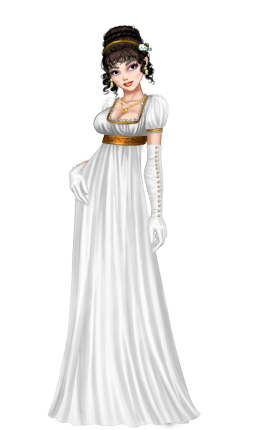
CASTING - DONE | R1-DONE
Last edited by BambiFoxx (Yesterday at 23:49)